
2026 Best Air Condition Pump for Global Buyers
Choosing the 2026 Best Air Condition Pump for Global Buyers requires more than comparing cooling capacity and purchase price. Buyers must examine seasonal efficiency, refrigerant type, noise levels, service access, voltage compatibility, and performance in extreme climates. A unit tested in a mild coastal city may struggle beside a dusty warehouse or under a 45°C rooftop.
The International Energy Agency reported that global heat pump sales increased by 11% in 2022, showing stronger interest in efficient electric heating and cooling. Its Future of Heat Pumps report also identifies heat pumps as important tools for reducing building emissions. IEA Executive Director Fatih Birol stated, “Heat pumps are an essential part of the solution to reduce emissions and energy consumption from buildings.” This point remains highly relevant for commercial buyers planning long equipment lifecycles.
However, the market picture is not perfectly clean. Industry reports often use different definitions for heat pumps, air conditioners, and reversible systems. That makes direct comparisons difficult. Our 2026 evaluation therefore focuses on measurable field factors, including COP, EER, low-ambient operation, maintenance intervals, warranty coverage, and documented test conditions. An efficient Air Condition Pump can lower electricity use, but poor installation may erase those gains. A five-star label is not enough.
This guide compares leading models for homes, offices, hotels, and light industrial sites. It considers regional climates, installer capability, replacement parts, and total ownership cost. The best choice is rarely the cheapest machine. It is the system that keeps working quietly, efficiently, and predictably after the showroom promise fades.
What Is an Air Conditioning Pump and How Does It Work?
An air conditioning pump is not always the same component. In split systems, it usually means a condensate pump. This small pump removes water from the indoor unit’s drain pan. Moisture condenses when warm room air crosses the cold evaporator coil. A float switch detects rising water, then activates a motor and impeller. The pump pushes condensate through a narrow discharge tube toward a drain.
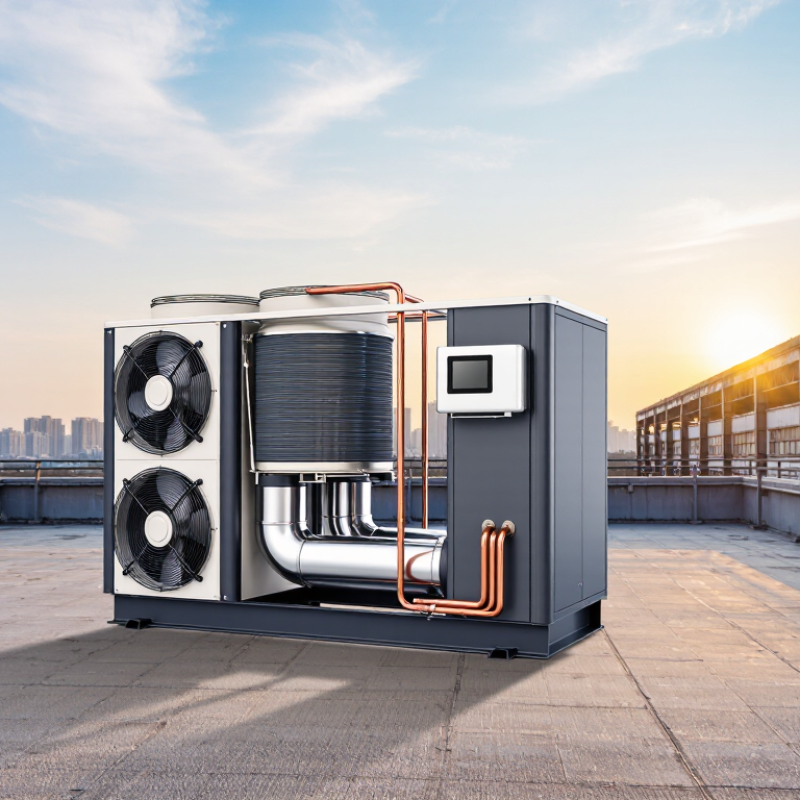
In larger buildings, the term may describe a chilled-water pump. It circulates cooled water between the chiller and indoor fan-coil units. A heat pump uses another principle: it moves heat between indoor and outdoor spaces through a refrigerant circuit. The compressor raises refrigerant pressure, while the expansion device lowers it. The pump itself does not create cooling. That distinction matters.
The International Energy Agency reported in The Future of Cooling that space cooling used about 10% of global electricity in 2018. It also projected cooling demand could more than triple by 2050. For global buyers in 2026, pump selection should match the system design, drainage height, flow rate, noise limit, and local voltage. Check the maximum lift carefully. A pump rated for 5 metres may struggle near that limit. Real installations are rarely perfect. Dust, uneven pipes, and a weak float switch can cause failures. I still see specifications that list flow rate without discharge height, which is incomplete engineering information.
2026 Best Air Condition Pump for Global Buyers
An air conditioning pump, commonly called a compressor in a vapor-compression system, raises the pressure and temperature of the refrigerant so heat can be transferred through the condenser. The chart compares typical coefficient of performance (COP) ranges for major air-conditioning and heat-pump system categories. A higher COP indicates greater heating or cooling output for each unit of electrical energy consumed.
Key Types of Air Conditioning Pumps for Global Applications
For global air-conditioning projects, pump selection starts with the system’s actual duty, not its catalog label. Condensate removal pumps suit split units and ceiling cassettes where gravity drainage is impossible. Chilled-water circulation pumps support central systems and large commercial buildings. Refrigerant pumps serve specialized low-temperature or flooded systems, requiring careful oil-return control. Vacuum pumps are used during installation to remove moisture and non-condensable gases from refrigerant circuits.
The International Energy Agency’s The Future of Cooling report projects that space-cooling energy demand could more than triple by 2050. This growth increases pressure on pump efficiency, noise control, and maintenance access. Variable-speed circulation pumps can reduce unnecessary electrical consumption under partial loads. However, savings depend on correct sizing, sensor settings, and clean filters. Small details matter. A blocked drain can stop an otherwise efficient unit.
Regional conditions also change the best choice. In humid coastal areas, condensate pumps need corrosion-resistant materials and reliable high-level alarms. In dusty inland regions, sealed bearings and accessible strainers can reduce service delays. The UNEP-led Global Status Report for Buildings and Construction reports that buildings consume about 32% of global energy, strengthening the case for efficient HVAC components. My practical concern is simple: buyers often compare flow rate alone. That is incomplete. Head height, water quality, refrigerant compatibility, voltage, sound levels, and local service capability deserve equal attention.
How to Compare Efficiency, Capacity, and Refrigerant Options
Choosing the best air condition pump in 2026 requires more than comparing catalogue prices. Efficiency, capacity, and refrigerant choice must match local weather and operating habits.
Start with seasonal ratings, not one laboratory COP figure. The IEA reports that space cooling could more than triple global electricity demand by 2050. A higher SEER or SCOP can reduce yearly consumption, but only when tested conditions resemble your climate.
Check performance at 2°C, 7°C, and the local design temperature. An oversized unit may cycle frequently, wasting energy and reducing comfort. A smaller unit may struggle during a humid, 40°C afternoon. Capacity matters.
Refrigerant selection also deserves careful review. The UNEP Ozone Secretariat links the Kigali Amendment with a phased reduction of high-global-warming-potential HFCs. Lower-GWP options can improve long-term regulatory resilience, yet safety classification, service skills, and ambient limits still matter.
Ask for the refrigerant’s GWP, charge size, leak-control requirements, and recovery procedure. Do not judge efficiency from refrigerant type alone. System design matters more.
The U.S. Department of Energy’s test procedures show why regional comparisons can mislead buyers. Ratings depend on defined temperatures, controls, and measurement methods. Request certified data, sound-power levels, defrost performance, and part-load efficiency. A spreadsheet helps, but it is not enough. I would also inspect installation quality, because poor airflow can erase impressive laboratory results. Some purchasing decisions remain uncertain. That uncertainty should be recorded, not hidden.
Climate, Installation, and Compliance Factors by Region
2026 Best Air Condition Pump for Global Buyers
Climate, Installation, and Compliance Factors by Region
Choosing an air-condition pump in 2026 requires more than checking rated efficiency. Local climate changes the real seasonal performance. In northern Europe, low-temperature heating and defrost cycles matter. In Southeast Asia, humidity control and corrosion resistance deserve equal attention. The IEA reported that global heat-pump sales grew by 11% in 2022, while European sales increased by about 40%. Demand is expanding, but a universal sizing rule still fails.
Installation conditions can change performance sharply. A long refrigerant line, poor drainage, or undersized electrical circuit may create noise and frequent shutdowns. In North America, installers should verify local efficiency rules, electrical codes, and refrigerant requirements under the U.S. AIM Act. European buyers must review Regulation (EU) 2024/573 and future restrictions on high-global-warming-potential refrigerants. Australia and New Zealand follow national HFC phase-down measures linked to the Montreal Protocol. Compliance is not paperwork alone. It affects service access, import clearance, and product lifespan.
How to Choose the Best Air Conditioning Pump for Your Needs
2026 Best Air Condition Pump for Global Buyers
How to Choose the Best Air Conditioning Pump for Your Needs
Choosing the best air conditioning pump starts with the system, not the price. Identify whether you need a condensate pump, circulation pump, or heat pump component. Check the required flow rate and lifting height. A pump working near its limit may overheat, especially during humid summer days. Allow a practical safety margin. Measure the drain distance, pipe size, and available installation space before ordering.
Electrical compatibility also matters for global buyers. Confirm voltage, frequency, plug requirements, and motor protection. Look for clear technical documents, recognized safety testing, and spare-part availability. A quiet pump is valuable in bedrooms, offices, and hotel rooms. Materials should resist moisture, corrosion, and repeated temperature changes. In real installations, small details often cause trouble. A poorly positioned outlet can create vibration, leaks, or unnecessary maintenance.
Tips: Compare the pump’s maximum head with your actual height and pipe route. Ask for noise data, service instructions, and warranty terms. Test the float switch before regular use. Do not select capacity by horsepower alone. It is tempting, but incomplete. Consider local climate, water quality, technician skills, and replacement access. A cheaper model may cost more when cleaning becomes difficult or components are unavailable. Recheck your measurements before purchase; even experienced installers occasionally miss one bend in the drain line.
2026 Best Air Condition Pump for Global Buyers - How to Choose the Best Air Conditioning Pump for Your Needs
| Pump Type | Typical Application | Typical Flow Rate | Typical Maximum Lift | Typical Electrical Rating | Noise Expectation | Main Advantages | Best Choice When |
|---|---|---|---|---|---|---|---|
| Miniature peristaltic pump | Wall-mounted split air conditioners and fan-coil units | Approximately 6–18 L/h | Approximately 6–12 m | 12–230 V AC/DC; commonly below 20 W | Low to moderate; installation quality strongly affects sound | Compact size, self-priming operation, suitable for long vertical discharge runs | Space is limited and the drain route requires a relatively high lift |
| Mini centrifugal pump | Residential split systems, ductless units, and small indoor units | Approximately 10–35 L/h | Approximately 5–10 m | 100–240 V; commonly 8–35 W | Low when correctly mounted and isolated from the wall | Good drainage capacity, simple design, widely compatible with HVAC controls | The unit produces a moderate condensate volume with a short or medium lift |
| Tank or reservoir pump | Ceiling cassette units, ducted systems, and commercial fan-coil units | Approximately 20–80 L/h | Approximately 5–15 m | 100–240 V; commonly 15–80 W | Low to moderate; the reservoir can reduce frequent start-stop noise | Handles intermittent condensate flow and provides a visible collection point | Condensate arrives in surges or the air conditioner has a high water output |
| High-head centrifugal pump | Large air handlers, commercial HVAC systems, and multi-zone installations | Approximately 50–250 L/h | Approximately 10–25 m | 100–240 V; commonly 40–250 W | Moderate; vibration isolation and pipe support are recommended | Higher drainage volume and stronger pressure capability than miniature pumps | The required lift, pipe length, or condensate volume exceeds small-pump limits |
| Dual-pump condensate system | Critical cooling rooms, data rooms, hospitals, and high-availability facilities | Approximately 50–300 L/h per operating pump | Approximately 10–25 m | 100–240 V; commonly 50–300 W per pump | Moderate; control panels and alarms may add operational sound | Redundancy, automatic lead-lag operation, and alarm outputs | A pump failure could cause equipment damage, downtime, or service interruption |
| Heavy-duty commercial pump | Large chilled-water air handlers and industrial climate-control equipment | Approximately 100–500 L/h | Approximately 15–30 m | 100–240 V single-phase or 380–415 V three-phase; typically above 100 W | Moderate to high; a dedicated equipment area is usually preferred | High flow capacity, durable construction, and suitability for continuous operation | The installation has a large condensate load and requires commercial-grade equipment |