2026 Top Manufacturing Machines Innovations What to Expect?
The landscape of manufacturing is rapidly evolving. Expected breakthroughs in manufacturing machines highlight the significant shifts on the horizon. According to a report by MarketsandMarkets, the global smart manufacturing market is projected to reach $505 billion by 2025. This growth stems from advancements in automation, the Internet of Things (IoT), and artificial intelligence.
Innovations in manufacturing machines promise to enhance efficiency and precision. For instance, collaborative robots, or cobots, are set to revolutionize workplaces by working alongside human operators. A McKinsey report indicates that automation could increase productivity by up to 40% in certain sectors. However, these advancements also bring challenges. The need for skilled labor is critical, yet many workers may lack necessary training.
Investing in new technologies requires careful consideration. Organizations must weigh the costs of new manufacturing machines against potential gains. The transition can be daunting, as risks of job displacement and technical failures may arise. As we approach 2026, understanding these dynamics becomes essential for industry stakeholders.
2026 Manufacturing Innovations: Overview of Emerging Technologies
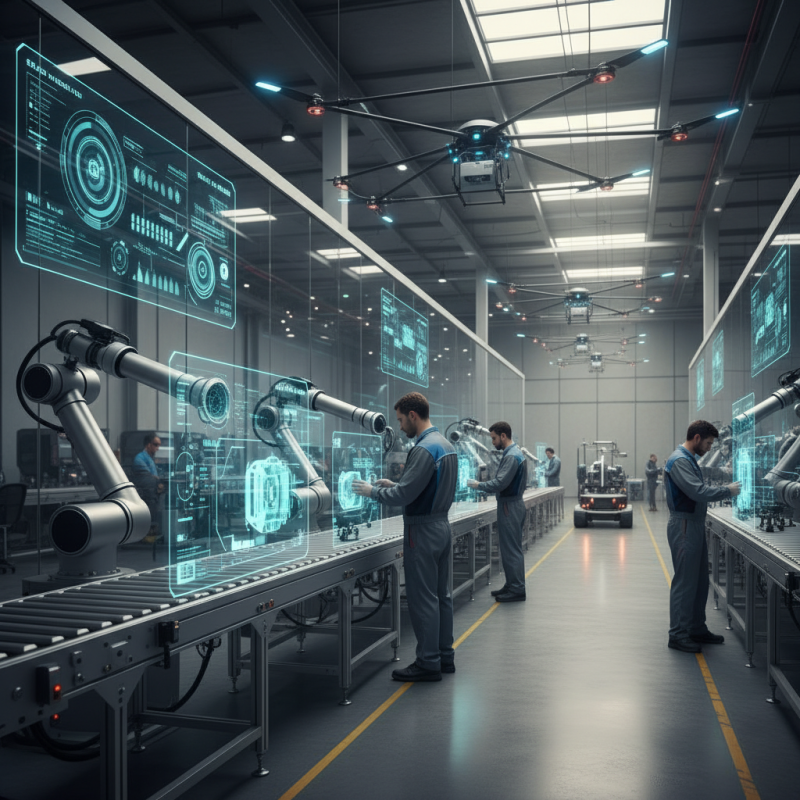
In 2026, the manufacturing landscape will witness significant innovations driven by advanced technologies. Industry analysts predict a surge in automation and smart manufacturing. According to a report from Market Research Future, the global smart manufacturing market is projected to reach $500 billion by 2026. This will be largely due to the integration of Artificial Intelligence (AI) and the Internet of Things (IoT) into production processes.
Robotics will play a crucial role in enhancing efficiency and precision. A study from Deloitte indicates that over 50% of manufacturers are expected to implement robotic solutions by 2026. These technologies reduce human error and increase output. However, the reliance on automation raises concerns. Workforce displacement is an issue that cannot be overlooked. The challenge will be to balance technological advancement with employment opportunities.
Additive manufacturing, or 3D printing, is also making strides. Research from Wohlers Associates reveals that the 3D printing industry could grow to $35 billion by 2026. This technology enables rapid prototyping and customization. Yet, there are limitations in materials and scalability. Companies will need to address these challenges to fully harness its potential. The journey toward innovation is complex.
Impact of Artificial Intelligence on Manufacturing Efficiency by 2026
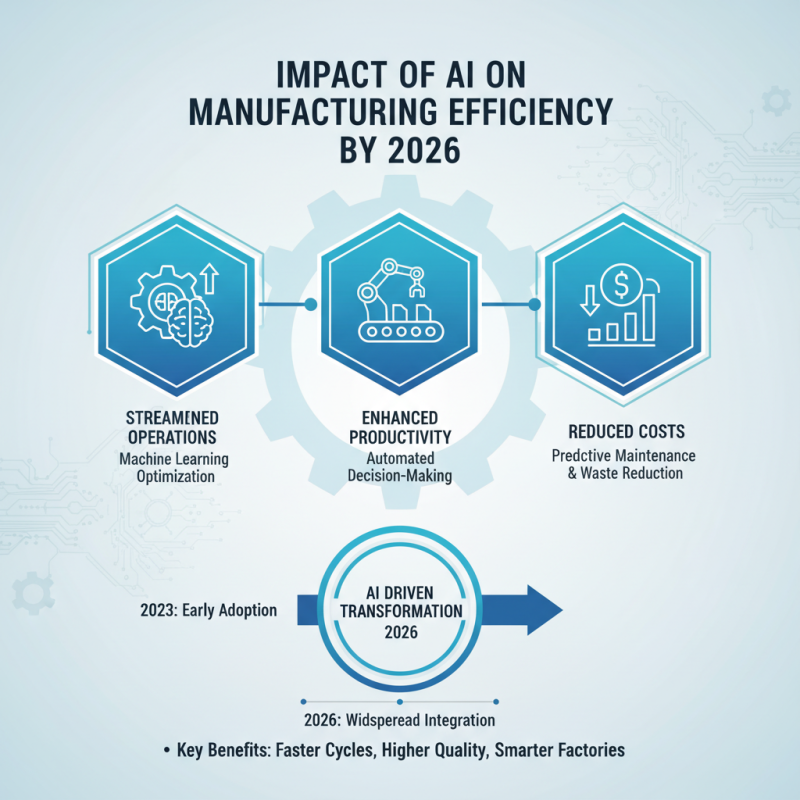
As we look ahead to 2026, the integration of artificial intelligence (AI) in manufacturing will transform efficiency profoundly. AI technologies are expected to streamline operations, enhance productivity, and reduce costs. Machine learning algorithms will analyze vast data sets, identifying patterns that humans might overlook. This capability can lead to more informed decision-making and optimized production schedules.
AI’s role in predictive maintenance is also significant. By analyzing equipment data, AI can predict failures before they happen. This proactive approach minimizes downtime, ensuring production flows smoothly. However, implementing these systems is not without challenges. Companies may struggle with data integration and require workforce training. Balancing technology adoption with human skills will be essential.
Despite the promise of AI, reliance on these systems raises ethical questions. Potential job displacement is a concern, as automation may replace certain functions. Moreover, data security becomes a crucial aspect, demanding robust strategies to safeguard sensitive information. Companies need to reflect on the implications of these innovations, ensuring that they are not only efficient but also responsible and equitable.
The Role of Automation in Reducing Production Costs in 2026
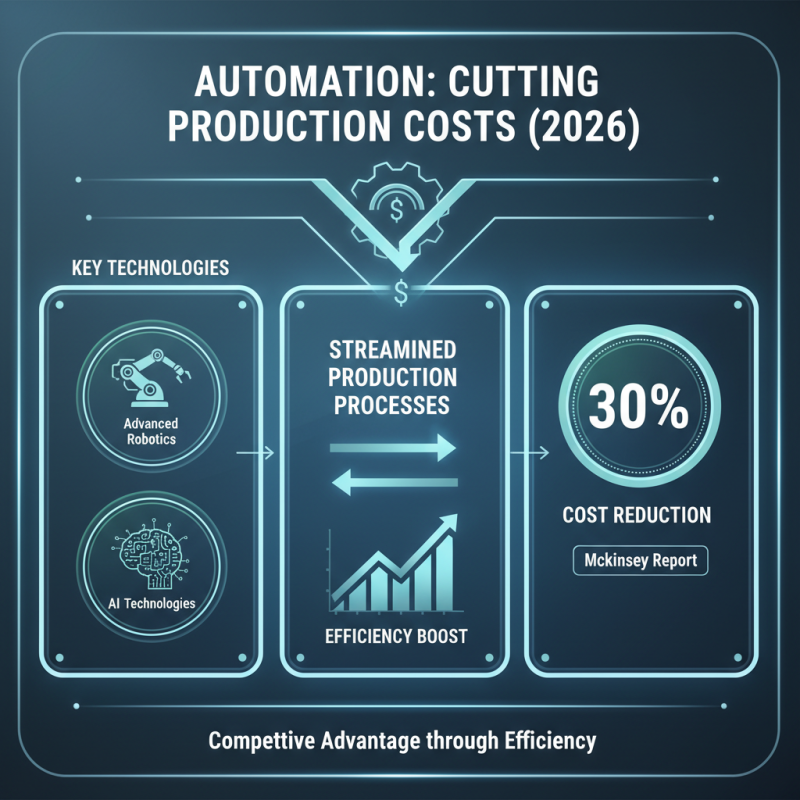
In 2026, automation is set to play a crucial role in manufacturing. Advanced robotics and AI technologies are streamlining production processes. According to a recent McKinsey report, automation can reduce production costs by up to 30%. This statistic highlights the growing importance of efficiency in a competitive landscape.
Manufacturers are increasingly adopting automated systems. These systems enhance precision and consistency. For example, a survey by Deloitte found that 62% of manufacturers plan to implement robotics in the next two years. However, the transition is not without challenges. Workforce retraining can create friction, as skilled labor is essential for managing these advanced systems.
While automation offers numerous benefits, it presents risks that should be evaluated. Cost savings must align with potential job displacements and ethical considerations. Industry leaders may need to balance profitability with community impact. Continuous assessment will be vital as companies move toward more automated operations, ensuring they remain sustainable and socially responsible.
Sustainability Trends: Eco-Friendly Manufacturing Machines for 2026
As we look towards 2026, sustainability in manufacturing is more crucial than ever. Eco-friendly machines are redefining production methods. These innovations focus on reducing carbon footprints and optimizing material usage. Newer machines harness renewable energy and minimize waste, showcasing the industry's shift towards greener practices.
Manufacturers are also prioritizing energy efficiency. Advanced technologies integrate smart systems that monitor energy consumption. This real-time data allows fine-tuning during production. It reduces costs and promotes sustainability. However, the transition can be challenging. Many companies face high initial investments and require staff retraining.
Tips: Evaluate your current processes. Identify areas where eco-friendly machines could fit. Research new technologies that align with your vision. Emphasizing sustainability may also open doors to new markets. Don’t overlook the importance of employee training. Engaged employees will embrace new practices more willingly, enhancing overall performance.
Predictive Maintenance: Enhancing Equipment Longevity and Performance by 2026
Predictive maintenance is set to revolutionize manufacturing by 2026. This approach relies on data analytics to anticipate equipment failures before they occur. According to the Manufacturing Technologies Association, companies employing predictive maintenance can see a reduction in maintenance costs by up to 30%. By leveraging sensors and IoT technology, manufacturers can gather real-time data to monitor equipment health.
The accuracy of predictive models is increasingly reliable. A report from the International Journal of Production Research states that predictive maintenance can improve equipment reliability by 50%. This not only enhances performance but also extends the lifespan of critical machinery. Capturing early signs of wear and tear allows teams to plan interventions, reducing unexpected downtimes.
Despite these advancements, not all companies have adopted predictive maintenance strategies. The transition requires investment in technology and training. Some manufacturers still rely on reactive maintenance practices, which can lead to increased costs and inefficiencies. The gap between early adopters and those lagging behind may widen, highlighting the importance of continuous improvement and adaptation in the industry.
2026 Top Manufacturing Machines Innovations What to Expect? - Predictive Maintenance: Enhancing Equipment Longevity and Performance by 2026
| Innovation |
Description |
Expected Impact |
Implementation Year |
| IoT-Enabled Sensors |
Sensors that monitor equipment in real-time. |
Enhanced predictive analytics for maintenance. |
2024 |
| AI for Maintenance Scheduling |
Artificial intelligence algorithms to optimize maintenance schedules. |
Reduced downtime and improved resource allocation. |
2025 |
| Augmented Reality (AR) for Training |
Use of AR to train staff on equipment maintenance. |
Faster training times and improved accuracy in tasks. |
2026 |
| Blockchain for Equipment History |
Using blockchain to track equipment maintenance history. |
Increased transparency and accountability in maintenance. |
2026 |
| Remote Monitoring Systems |
Systems to monitor equipment performance remotely. |
Immediate response to potential issues from anywhere. |
2025 |