How to Choose Sanitary Napkin Machines for Your Business?
Choosing sanitary napkin machines is not simply a decision about speed, price, or attractive photographs. It is a production decision that affects product quality, labor needs, factory space, maintenance, and long-term profit. A machine may promise 800 pieces per minute, yet perform differently with your chosen absorbent core, nonwoven fabric, or release paper.
Ravi K. Sharma, a sanitary-product machinery consultant with years of factory experience, explains, “A machine should fit the factory before it fits the brochure.” That advice deserves attention. Measure your available floor space. Check electrical capacity. Examine the compressed-air system. Leave room for operators and maintenance access. Small details often become expensive problems.
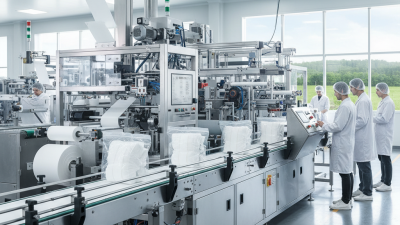
Reliable sanitary napkin machines should provide stable forming, accurate sealing, clean cutting, and consistent product dimensions. Ask suppliers for running samples, not only technical sheets. Watch the line operate. Listen for unusual vibration. Inspect rejected products beside accepted ones. These details reveal more than a polished sales presentation.
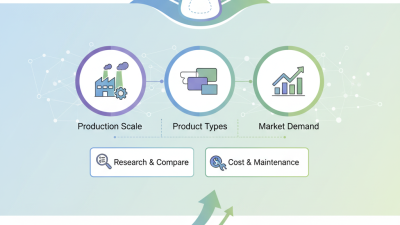
A faster line is not always better. It may require more skilled operators, more spare parts, and stricter process control. Consider production volume, product styles, automation level, raw-material availability, and after-sales support. Confirm installation training and response times before signing an order.
There is no perfect machine.
The best choice balances output, quality, safety, service, and future expansion. You may still make a wrong assumption. That is normal. Test carefully, question optimistic claims, and select equipment that your team can operate confidently every day.
Define Production Goals Using 300–1,200 Pads per Minute Benchmarks
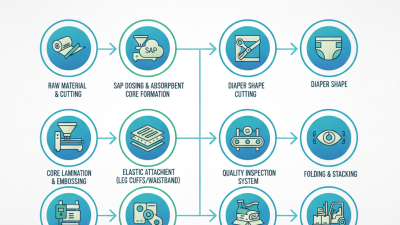
Choosing a sanitary napkin machine starts with your production target, not the largest number on a brochure. The 300–1,200 pads-per-minute range is a useful benchmark for comparing equipment. It is not a promise of daily output. A line rated at 1,000 pads per minute may run slower when core thickness, wrapper film, or product dimensions change.
Estimate demand by shift, then account for planned cleaning, changeovers, rejects, and maintenance. For example, a line running at 600 pads per minute for eight hours at 70% effective operating time would produce about 202,000 pads. That is an estimate, not a guarantee. Your actual figure depends on the product and operating conditions. Keep room for demand growth, but avoid paying for speed your team cannot consistently use.
A machine near 300–600 pads per minute may suit a smaller operation or a product range with frequent changeovers. Higher-speed equipment can make sense when orders are steady and packaging can keep pace. Ask for sustained-run results using materials and pad sizes like yours. Check the good-product count, reject rate, and time needed to change formats. I would not choose from a short demonstration alone; impressive speeds can hide ordinary production delays.
Match Product Design to ISO 10993 Safety and Absorbency Requirements
How to Choose Sanitary Napkin Machines for Your Business?
Match Product Design to ISO 10993 Safety and Absorbency Requirements
Choosing a sanitary napkin machine starts with the product’s contact profile, not its advertised speed. ISO 10993-1:2018 recommends evaluating biological risks based on material type, contact duration, and body contact. For menstrual products, this means reviewing skin irritation, sensitization, cytotoxicity, and chemical extractables. Ask whether the machine supports controlled adhesive application, clean material handling, and traceable batch settings. Small contamination can become a serious quality problem.
Absorbency also needs measurable design targets. UNICEF reports that about 500 million women and girls lack adequate menstrual health facilities globally. Reliable products therefore need consistent fluid intake, retention, and leakage control. Select equipment that adjusts pulp distribution, absorbent-core density, embossing depth, and sealing pressure. Laboratory checks should include fluid retention, rewet, strike-through time, and leakage under movement. EDANA test methods can support repeatable comparison between product designs.
Higher absorbency is not automatically better. A thick core may feel uncomfortable and waste material. A thinner product may fail during heavy flow. The specification can be wrong. Pilot runs should use realistic fluid volumes, storage conditions, and production speeds. Include in-line vision inspection and sampling plans, even when they increase initial costs. Machines with flexible tooling allow corrections after user testing, because early assumptions often miss comfort, odor, or skin-response issues.
How to Choose Sanitary Napkin Machines for Your Business?
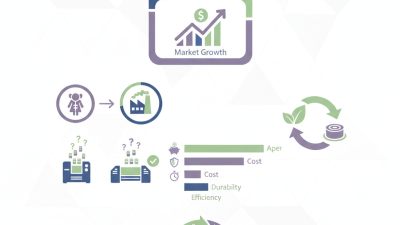
Match product design to ISO 10993 safety considerations and measurable absorbency requirements.
This illustrative evaluation model prioritizes the product attributes that should be verified during machine selection. Absorbency capacity, acquisition speed, rewet control, and dimensional consistency should be confirmed through standardized laboratory testing. ISO 10993 is a risk-based framework for evaluating biological safety; it does not define universal absorbency limits, so the finished product and its intended contact duration must be assessed separately.
Compare Automation Levels, Labor Needs, and 85%+ Line Efficiency
How to Choose Sanitary Napkin Machines for Your Business?
Automation level affects staffing, output consistency, and the skills your team needs. A semi-automatic line may suit a smaller operation, but workers must handle more material feeding, inspection, and packing. A highly automated line can reduce repetitive tasks and maintain steadier production, yet it needs trained operators for setup, fault checks, and maintenance. Less manual work does not mean no labor.
Look beyond the machine’s rated speed. Ask suppliers to define how line efficiency is calculated, including downtime, changeovers, and rejected products. An 85%+ efficiency target can be useful, but it is not a guarantee. Product specifications, material quality, operator training, and maintenance all affect actual results. Request a live demonstration using materials similar to yours. Watch how quickly the line recovers after a jam. Small details matter.
Estimate labor needs by shift, not just by machine. Count operators, quality checks, material handling, and maintenance support. A line that appears efficient on paper may require extra staff during roll changes or size adjustments. I would compare several production scenarios before choosing; projections can be wrong. Track output, stoppages, and scrap during a trial run, then revisit staffing assumptions once the line is stable.
Evaluate Raw-Material Waste, Energy Use, and 5–10-Year Operating Costs
Choosing a sanitary napkin machine means comparing more than its purchase price. Track material yield during production trials: record absorbent-core, topsheet, and backsheet input against accepted products, including startup rejects and web breaks. A small waste rate can become costly across every shift. Ask suppliers for measured results at your target speed, not just rated capacity. Then verify them with your own materials.
Energy deserves the same scrutiny. The U.S. Energy Information Administration reported an average industrial electricity price of about 8.4 cents per kilowatt-hour in 2023. Your local tariff may differ, but this offers a useful benchmark. Compare metered kilowatt-hours per thousand acceptable pads, including idle time, compressors, and heating. Tips: Request a production trial, weigh scrap, and log power use. Small details matter.
Build a 5–10-year cost model covering energy, material loss, labor, maintenance, spare parts, and planned downtime. Use conservative estimates; perfect uptime is rarely real. Ask for service intervals and replacement-part prices in writing. A machine with lower scrap may justify a higher initial cost, but only if trial data supports the claim. Leave room for uncertainty. One overlooked cost can change the result.
How to Choose Sanitary Napkin Machines for Your Business? — Evaluate Raw-Material Waste, Energy Use, and 5–10-Year Operating Costs
Illustrative planning comparison for three machine configurations. Figures below are scenario inputs and calculated estimates—not industry averages, supplier quotations, or guaranteed performance. Confirm actual specifications and costs through trials and written supplier offers.
| Evaluation Metric |
Entry-Level / Conventional Line |
Servo-Controlled Line |
High-Speed Automated Line |
| Illustrative purchase and installation cost |
$450,000 |
$700,000 |
$1,100,000 |
| Rated output used in this model |
600 products/minute |
800 products/minute |
1,000 products/minute |
| Assumed realized production rate |
55% of rated output |
65% of rated output |
70% of rated output |
| Assumed material loss as share of input |
7.0% |
4.5% |
3.5% |
| Assumed electricity demand while running |
180 kW |
210 kW |
250 kW |
| Energy use per 1,000 saleable products |
9.1 kWh |
6.7 kWh |
6.0 kWh |
| Annual saleable production assumed |
100 million products |
150 million products |
200 million products |
| Annual material input cost assumed |
$2,000,000 |
$3,000,000 |
$4,000,000 |
| Annual material cost attributed to waste |
$150,538 |
$141,361 |
$145,078 |
| Annual electricity cost assumed |
$109,200 |
$120,750 |
$120,000 |
| Annual maintenance and spare-parts allowance |
$45,000 |
$63,000 |
$99,000 |
| Estimated 5-year cost of ownership |
$2,473,690 |
$3,325,555 |
$4,020,390 |
| Estimated 10-year cost of ownership |
$4,497,380 |
$5,951,110 |
$6,940,780 |
| Best suited to |
Lower-volume operations prioritizing a lower initial investment |
Businesses balancing throughput, material control, and investment |
High-volume operations able to support greater utilization and technical service |
Model assumptions: Electricity is priced at $0.12/kWh; the line runs 4,000 productive hours per year; input material costs are $0.020 per product for the entry-level case and $0.020 per product for the other cases; annual maintenance is modeled at 10% of purchase and installation cost; and purchase cost is included once. Material waste cost is calculated as annual material input cost × waste rate ÷ (1 − waste rate). Energy cost is calculated from modeled kWh per saleable product × annual output × electricity tariff. Costs are undiscounted and exclude labor, financing, taxes, building costs, packaging, downtime beyond the stated production assumptions, and inflation. Actual results depend on product design, line speed, uptime, changeovers, scrap measurement, utility rates, and local service availability.
Verify Supplier Support, Machine Compliance, and Return-on-Investment Data
Before comparing machine speed, ask how support works after installation.
Request a written service response time, spare-parts list, operator training plan, and remote troubleshooting process. A stopped line can leave finished-product orders waiting beside idle equipment. Ask for references from plants running similar materials and production volumes.
Grand View Research estimated the global feminine hygiene products market at USD 42.7 billion in 2023, with continued growth projected through 2030.
That estimate signals demand, not guaranteed sales for your factory. Check local customer forecasts and retailer commitments.
Compliance needs evidence, not a sales promise.
Ask for the machine risk assessment, electrical documentation, and safety-test records relevant to your operating country.
ISO 12100 offers a framework for machinery risk assessment; it does not replace local requirements.
Inspect guards, emergency stops, and changeover access during a live demonstration. Small details matter. A guard that slows cleaning may tempt rushed operators to bypass procedures.
I would verify this on the factory floor, not only in a polished video.
For ROI, request a calculation showing output per shift, scrap rate, staffing, energy use, maintenance, and expected downtime.
Compare those figures with your own trial data and order mix.
For example, a quote may promise 300 pads per minute, but your line could run slower with absorbent-core changes or packaging delays.
Treat the quoted rate as a hypothesis. Ask for a witnessed acceptance test using your target materials, then compare usable output with the supplier’s forecast before approving payback claims.