How to Choose the Best Front Motorcycle Spoke Wheel in 2026
Choosing the right Front Motorcycle Spoke Wheel in 2026 is not just a matter of style. The wheel must match your motorcycle’s specifications, riding conditions, and maintenance needs. A shiny rim may catch the eye. It can still be the wrong fit. Check the required diameter and width, hub compatibility, axle dimensions, brake setup, and spoke pattern before comparing finishes or prices.
Motorcycle chassis engineer Tony Foale is known for his technical work on motorcycle handling and design. A practical takeaway from that work is: “Match the wheel to the machine and the ride.” This is a paraphrase, not a direct quotation. It captures an important point: a wheel that looks suitable may alter handling or fail to fit correctly if key dimensions differ. For regular road use, inspect spoke material, rim construction, corrosion resistance, and the availability of replacement parts. For rougher routes, durability and serviceability deserve extra attention.
Small details matter. A spoke that feels loose, a rim with a visible dent, or uneven tension can signal a problem. Ask the seller for clear specifications, confirm fitment with the motorcycle manufacturer’s guidance, and consult a qualified wheel builder when measurements are uncertain. Do not rely on appearance alone. This guide will compare the main wheel types, explain which specifications to check, and outline practical questions to ask before buying. One honest caveat: no single wheel suits every rider, and maintenance still matters after installation.
Understand the Parts and Design of a Front Spoke Wheel
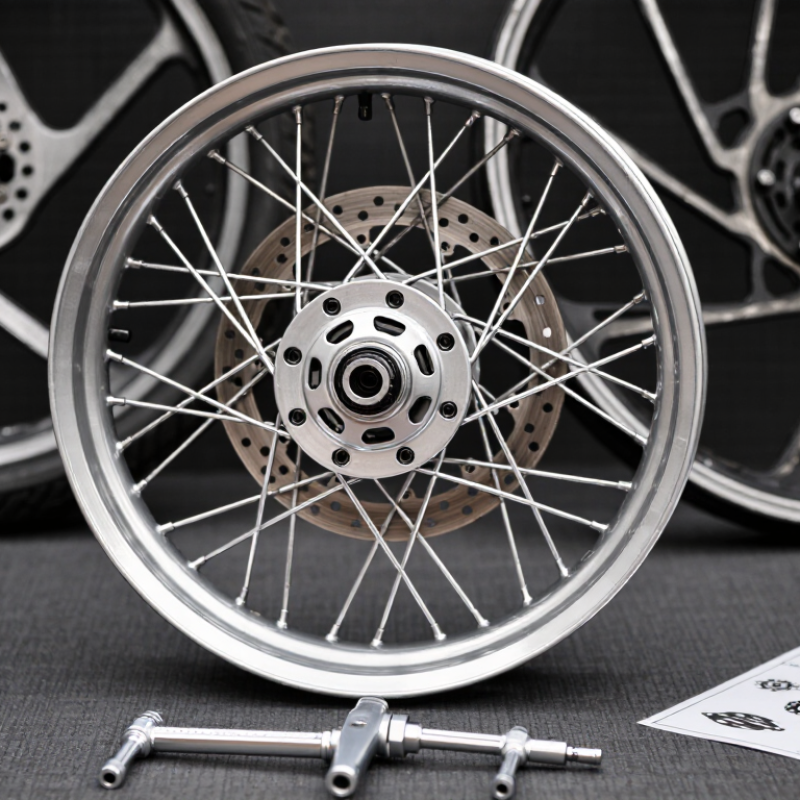
A front spoke wheel is a small system, not just a rim with wire supports. Its hub carries axle loads and houses bearings; the rim holds the tire bead and spoke nipples. Spokes connect hub flanges to rim holes, while nipples allow tension adjustment. That detail matters. A wheel may look straight while several spokes carry uneven tension. Use a spoke-tension gauge and check lateral and radial runout against the motorcycle’s service specifications. Don’t rely on tapping sounds alone.
Design starts with fitment: axle diameter, hub width, brake-disc position, rim diameter, and spoke count must match the motorcycle. The lacing pattern, often crossing spokes, affects how loads travel between hub and rim. Rim width also shapes tire fit and profile, so follow tire and wheel specifications. Look for corrosion, cracked nipples, loose spokes, and dents around the rim bed. Small clues count. Material choices and spoke gauge influence weight, flexibility, and maintenance, but no single setup suits every rider or terrain. “Stronger” on paper does not automatically mean better handling. Compare intended use, parts compatibility, and repair access before choosing a design.
How to Choose a Front Motorcycle Spoke Wheel in 2026
Typical spoke counts found in motorcycle wheel configurations
Front wheels commonly use 32, 36, or 40 spokes, depending on the wheel and motorcycle design. Spoke count alone does not determine strength: rim and hub design, spoke size, lacing pattern, and correct tension also matter. Check the motorcycle manufacturer’s specifications before choosing a replacement wheel.
Check Wheel Fitment Against Your Motorcycle’s Specifications
How to Choose the Best Front Motorcycle Spoke Wheel in 2026
Check Wheel Fitment Against Your Motorcycle’s Specifications
A front wheel can look right and still sit incorrectly. Compare its rim diameter and width with the motorcycle’s service manual, then verify axle diameter, hub width, bearing sizes, and brake-disc offset. Check the spoke pattern, too; spoke count alone does not confirm compatibility. The tyre must also match the rim’s approved size range. ISO 5751-3:2010 covers dimensions for motorcycle rims, but it does not replace the fitment specifications for your exact model and year. Measure twice. A small offset error can leave a disc misaligned with the caliper.
Before ordering, compare the wheel’s load rating and confirm clearance around the fork, brake caliper, and any speed-sensor ring. If the original wheel is available, measure its hub and disc positions rather than relying on a listing photo. Ask the seller for written confirmation of exact-year fitment and included bearings or spacers. NHTSA reported 6,222 motorcyclist fatalities in its 2022 Traffic Safety Facts; that figure does not identify wheel fitment as a cause, but it underlines why safety-critical parts deserve careful checking. I’ve seen fitment lists omit small spacer details. Don’t assume they’re interchangeable. After installation, have a qualified technician check wheel alignment, spoke tension, and brake operation.
Compare Rim Materials, Spoke Counts, and Hub Construction
When choosing a front motorcycle spoke wheel, compare rim material with your riding conditions. Aluminum rims are generally lighter and resist corrosion, while steel rims can be less costly but add weight. A lighter rim may make steering feel more responsive, though rider, tire, and suspension setup also affect handling. Material alone does not determine durability.
Spoke count is only part of the strength equation. More spokes can distribute loads across more attachment points, but spoke gauge, lacing pattern, rim stiffness, and even tension matter. Fewer spokes may reduce weight, yet they leave less room for uneven tension to go unnoticed. Small details matter. Check for loose spokes and inspect the rim after hard impacts; a wheel can look straight while tension is uneven. I would not choose by count alone.
Hub construction affects fit and serviceability. Confirm axle diameter, hub width, brake rotor mounting, and any speed-sensor fittings against your motorcycle’s specifications. Look for sound bearing seats, properly fitted seals, and clear access for maintenance. A well-machined hub can still be the wrong choice if its spacing does not match the fork or brake setup. Measurements can be easy to misread, so verify them before ordering rather than relying on appearance.
Match Wheel Strength and Weight to Your Riding Conditions
A front motorcycle spoke wheel must suit the ground you ride, not just look sturdy on a spec sheet. Smooth roads place different demands on a wheel than rocky tracks, potholes, or frequent curb-height impacts. Rough surfaces call for a stronger margin against impact and a rim suited to the expected load. The front wheel also handles steering inputs and braking forces, so stability matters. Not always the lightest choice.
Weight still deserves attention. A lighter wheel can make steering feel more responsive, but a very light setup may offer less reserve for heavy loads or repeated hits. Consider your motorcycle’s approved wheel dimensions, axle, brake, and load limits before comparing options. Spoke count alone does not prove strength; rim construction, spoke quality, tension, and assembly all affect how the wheel performs. Small details matter.
Think about a typical ride: pavement with occasional gravel may not justify the same wheel as regular rocky trails. A practical check is to inspect spoke tension and the rim for dents after hard rides, and to have a qualified technician assess damage or unusual looseness. I would not choose by weight alone; that shortcut can overlook the conditions that actually wear a front wheel.
Verify Quality, Safety Standards, and Maintenance Requirements
A front motorcycle spoke wheel should match the bike’s axle, brake, and fork dimensions—not just its advertised diameter. Check the rim for dents, uneven joints, and visible corrosion. Spokes should be evenly seated, with no loose nipples or sharp bends. Ask for material details, load ratings, and documentation showing which safety standards the wheel meets. Requirements vary by wheel type and region, so confirm compatibility with the motorcycle’s service manual or a qualified technician. A polished finish can hide problems. Look closely.
Tips: Spin the raised wheel and watch the rim against a fixed reference point. Noticeable side-to-side movement deserves a professional check. Never guess at spoke tension; uneven tightening can distort the rim.
Maintenance matters after installation. Recheck spoke tension at the interval recommended for the wheel, especially after initial use or hard impacts. Inspect for cracks, loose nipples, and changes in handling. Clean away road grit with a soft brush, then dry the rim and spoke crossings to limit corrosion. Keep a simple record of inspections. It may feel fussy, but a few minutes can reveal a small problem before it affects braking or steering. If the wheel wobbles, spokes keep loosening, or a crack appears, stop riding and have it assessed.
