How to Choose the Right 2-Way Foley Catheter?
Choosing the right 2-Way Foley Catheter means matching the device to the patient’s clinical needs, not simply picking a familiar size. One channel drains urine; the other inflates the retention balloon. That simple design still requires careful selection.
Dr. Sanjay Saint, a physician-researcher known for work on urinary-catheter safety, has emphasized minimizing unnecessary catheter use. Paraphrased as a practical rule: use a catheter only when there is a clear clinical need. The decision should also account for the reason for catheterization, expected duration, and the patient’s anatomy and comfort. Details matter.
Clinicians may consider catheter diameter, material, length, and the manufacturer’s balloon specifications. A French size that is too large can cause avoidable discomfort or trauma, while an unsuitable material may be a concern for someone with a latex allergy. The drainage system must connect securely, and the balloon should be filled only as directed by the product instructions and clinical protocol. Small mismatches can matter.
This guide will explain what those features mean and which questions to raise with a qualified healthcare professional. It will not replace an individual assessment. The best choice can vary with the clinical situation, and product labels do not always make comparisons easy. That deserves a closer look. Never select or insert a Foley catheter without appropriate clinical guidance and training.
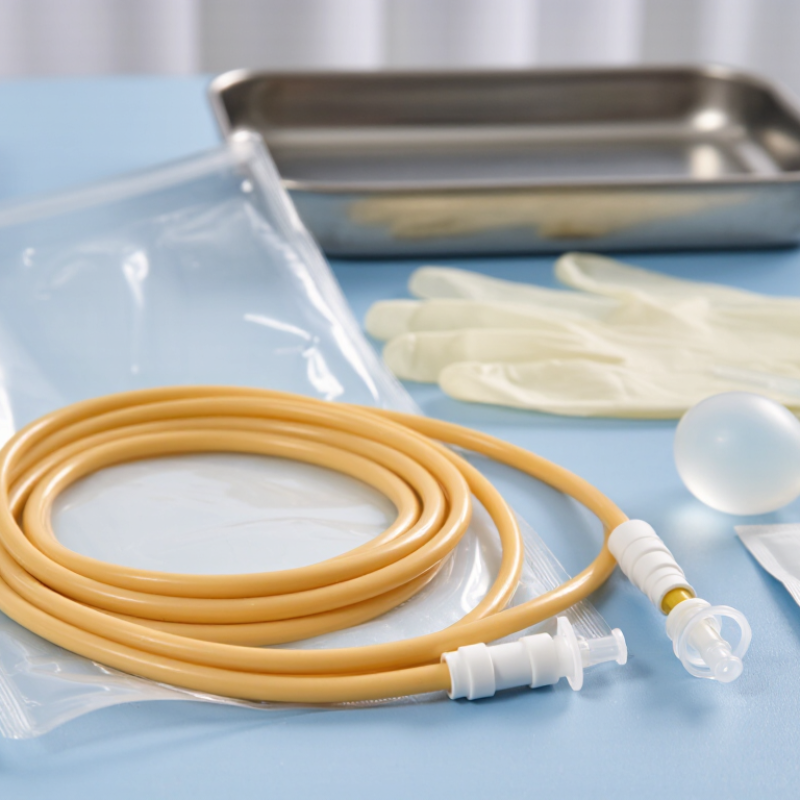
Define the Two-Way Foley’s Drainage and Balloon-Inflation Lumens
A two-way Foley catheter contains two separate lumens, or channels, inside one tube. The larger drainage lumen carries urine from the bladder through the catheter and into a collection bag. At the bladder end, small drainage eyes allow urine to enter. Keep the tubing unkinked and the bag below bladder level to support continuous drainage.
The narrower balloon-inflation lumen serves a different purpose. It connects to the retention balloon near the catheter tip. A clinician uses the specified sterile fluid and volume to inflate the balloon after confirming placement, helping keep the catheter in the bladder. The same channel is used to deflate it before removal. Never use the drainage lumen for balloon inflation, or pull against a balloon that may still be inflated.
The details matter. A blocked drainage path may cause discomfort and needs prompt clinical assessment; it is not a reason to manipulate the balloon channel. Check the product instructions, since balloon volumes and compatible fluids can vary. It is easy to focus on catheter size and overlook the two channels. That deserves a second look. If urine stops flowing, leakage occurs, or removal is difficult, contact a qualified healthcare professional rather than forcing the catheter.
How to Choose the Right 2-Way Foley Catheter?
Define the two-way Foley’s drainage and balloon-inflation lumens
A 2-way Foley catheter has two separate lumens: one drains urine from the bladder, and the other allows the retention balloon to be inflated or deflated. Confirm catheter size and balloon-fill instructions using the product labeling and clinical guidance.
Choose French Size: 1 Fr Equals 0.33 mm; Follow CDC’s Smallest-Bore Guidance
French size (Fr) describes a catheter’s outer diameter: 1 Fr equals about 0.33 mm. A 12 Fr catheter is therefore about 4 mm wide. The number does not describe the drainage channel’s inner diameter. Check the package size and prescribed order carefully; a larger number means a wider catheter.
CDC guidance recommends using the smallest bore that still allows adequate drainage, helping reduce urethral and bladder-neck trauma. The right size depends on the person’s anatomy and clinical needs, not a single rule for everyone. Thick urine, clots, or other concerns may affect the choice, so a healthcare professional should assess them. Numbers help, but the conversion alone cannot determine suitability. Even a well-chosen size may need reassessment if insertion is difficult or drainage is poor.
Tips: Confirm the Fr size before use, and follow the care plan. Do not increase the size just to address slow flow; kinks, positioning, or blockage may be involved. Seek clinical advice for pain, resistance, leakage, or little or no urine. A size chart is useful, but it is not a substitute for patient-specific assessment.
Compare Latex and Silicone Materials for Intended Use and Sensitivity
How to Choose the Right 2-Way Foley Catheter?
Material choice matters, especially when sensitivity is a concern. Latex catheters are flexible and commonly used for short-term drainage when a patient has no known latex sensitivity. Some people develop itching, redness, or swelling after latex exposure. Tell the clinician about any previous reaction. Even a mild one matters.
Silicone is a latex-free option often considered for people with latex allergy or sensitivity. It may also be selected for longer-term use, depending on the clinical situation and the product’s instructions. But silicone is not automatically the best choice for everyone. Comfort, catheter size, drainage needs, and the expected duration of use all matter. Not always obvious.
Before placement, check the package labeling with a healthcare professional and confirm the material and intended use. Ask how the catheter should be secured and what symptoms need attention. New pain, fever, leakage, or blood in the urine warrants prompt medical advice. Discomfort alone does not identify the cause; fit, positioning, and other factors may also be involved. A clinician can help weigh these details rather than relying on material alone.
Match Balloon Volume to the Label: 10 mL and 30 mL Options Are Common
Choosing a 2-way Foley catheter means checking more than its French size. Read the balloon-volume label before use. The balloon holds the catheter in place inside the bladder, and its stated volume matters. Labels commonly list 10 mL or 30 mL options. These numbers are not interchangeable choices based on personal preference.
A 10 mL balloon is common for routine use, while a 30 mL option may be selected for specific clinical reasons. The correct choice depends on the prescription, the patient’s needs, and the catheter’s instructions. Do not assume that a larger balloon will prevent leakage or improve drainage. It may cause harm if used inappropriately. Inflate only with the specified fluid and volume, following the product directions and clinician guidance. It is easy to focus on the number and miss the rest of the label.
Tips: Check the balloon volume and catheter type together. Confirm the intended fill volume before inflation. If the label is unclear, pause and ask a qualified clinician. Do not guess.
Check Length and Compliance with ISO 20696:2018 for Single-Use Catheters
How to Choose the Right 2-Way Foley Catheter?
Length is a practical safety check, not a cosmetic detail. A catheter that is too short may not suit the intended patient or placement, while excess length can make securement and drainage management awkward. Check the product label for the stated length and patient group. Do not infer suitability from French size alone; diameter and length describe different features. Not a guess. A clinician should confirm the appropriate option for the patient and care setting.
For a single-use catheter, look for clear documentation of compliance with ISO 20696:2018, which covers sterile urethral catheters for single use. Review the instructions for use, packaging, and technical documentation, and verify that the stated standard matches the product and its intended use. Check sterility information, catheter configuration, and balloon details as well. A standards reference is useful, but it does not by itself prove that a catheter is right for a particular patient.
It is easy to focus on a familiar size and overlook length. Pause and compare the labeled dimensions with the clinical requirement before selection. If documents are unclear or inconsistent, ask the supplier or clinical team to clarify them. Even a small labeling detail deserves another look.