
7 Tips for Global Buyers Choosing the Best Underpad Machine?
Global buyers are entering a more demanding underpad machine market. Aging populations, hospital expansion, and home-care services are increasing demand for reliable absorbent hygiene products. The World Health Organization projects that one in six people worldwide will be aged 60 or older by 2030. By 2050, this population may reach 2.1 billion. That shift affects production planning, not only sales forecasts.
Industry studies from Smithers and Grand View Research also show steady development across nonwoven materials and adult incontinence products. However, market growth does not make every machine a safe investment. A low purchase price can hide unstable web tension, excessive material waste, or difficult spare-part access. One small sealing fault can spoil hundreds of products beside the production line.
Alexandre Kalache, a recognized global ageing expert, has said, “Ageing is a triumph of development.” His observation reminds buyers to connect machinery choices with real care needs. An underpad machine should support clean production, consistent absorbency, operator safety, and dependable maintenance. It should also match local labor skills and utility conditions. Some buyers overlook these practical details.
That mistake is understandable.
This guide, “7 Tips for Global Buyers Choosing the Best Underpad Machine,” examines capacity, raw-material compatibility, automation, quality control, energy use, supplier credibility, and after-sales service. The recommendations are practical, but not absolute. A machine proven in one country may perform differently elsewhere. Careful testing remains essential.
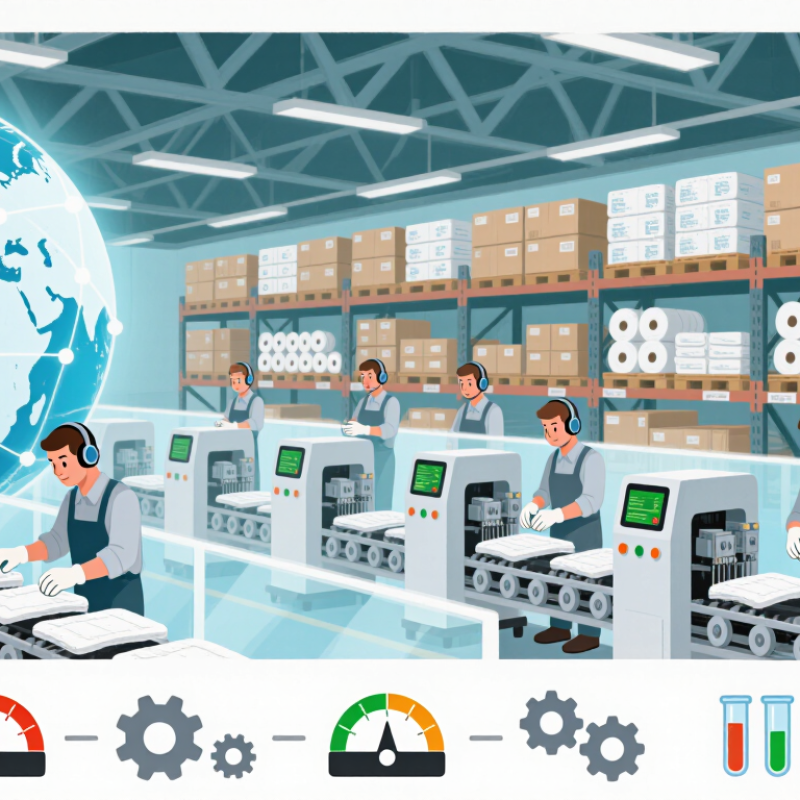
Define Your Underpad Production Requirements and Target Market
Before comparing an underpad machine, define exactly what you will produce. Specify pad dimensions, absorbency levels, core materials, backing film, and sealing method. A hospital product may need a thicker absorbent core and stronger leakage protection. A home-care product may prioritize soft handling and convenient packaging. Pet pads often require different sizing and odor-control features.
Set a realistic production target. Estimate daily orders, working hours, changeover frequency, and acceptable waste. A machine rated at 600 pieces per minute may not deliver that output with every material. Film tension, pulp quality, operator skill, and maintenance can reduce actual speed. Real numbers matter. Ask for sample runs using your planned materials. Check absorbency, edge sealing, cutting accuracy, and package appearance.
Your target market also affects machine design. Local distributors may need several sizes, while institutional buyers may prefer one standard specification. Review customer expectations, packaging language, storage conditions, and applicable product standards before selecting equipment. Confirm electrical requirements, air consumption, spare-part access, and technician support. A low purchase price can become expensive when downtime lasts for days. I have seen production plans fail because demand was estimated from inquiries rather than paid orders. That mistake is easy to repeat. Leave room for seasonal demand, but do not buy capacity you cannot support.
7 Tips for Global Buyers Choosing the Best Underpad Machine? - Define Your Underpad Production Requirements and Target Market
| Tip | Planning Dimension | Typical Production Requirement | Target-Market Application | Key Machine Specification | Acceptance Check |
|---|---|---|---|---|---|
| 1 | Define product dimensions | Common finished sizes include approximately 40 × 60 cm, 60 × 60 cm, and 60 × 90 cm. Confirm whether the machine must support multiple sizes without major tooling changes. | Pet-care, home-care, nursing-care, and hospital channels may require different sizes and folding formats. | Adjustable forming width; servo-controlled length setting; automatic size changeover where required. | Verify finished length and width tolerance on at least 30 consecutive pieces. |
| 2 | Match absorbency to use case | Typical disposable underpads use a combination of top sheet, absorbent pulp or fluff, optional superabsorbent polymer, tissue, and waterproof backsheet. Absorbency commonly ranges from several hundred millilitres to more than 1,000 mL depending on size and construction. | Light-use household products need lower basis weight; healthcare and overnight products generally require higher absorbent capacity and stronger leakage protection. | Accurate dosing of fluff and superabsorbent polymer; stable core distribution; optional embossing and leak-guard forming. | Test basis weight, liquid absorption, rewet, leakage, and core uniformity using a documented laboratory method. |
| 3 | Choose an appropriate output level | Entry and medium production lines are commonly planned around 80–160 pieces per minute, while higher-speed configurations may target approximately 180–250 pieces per minute, depending on size, materials, and packaging format. | Regional distributors may need flexible medium output; large institutional contracts may justify higher nominal capacity. | Rated speed, usable speed, changeover time, and overall equipment effectiveness should be evaluated separately. | Run the machine for a sustained production test and record actual good pieces per minute, scrap rate, and unplanned stops. |
| 4 | Specify the material structure | A typical structure may include nonwoven top sheet, absorbent core, tissue or airlaid layer, and polyethylene or breathable film backsheet. Material widths, roll diameters, grammage, and splice requirements must be defined before machine selection. | Healthcare buyers may prioritize softness, fluid handling, and low lint; household and pet-care buyers may prioritize cost, odor control, and package appearance. | Multiple unwinding stations, tension control, web alignment, dust management, and roll-splice detection. | Confirm compatibility with the planned material grammage, roll core diameter, maximum roll diameter, and web width. |
| 5 | Plan packaging and logistics | Common packaging formats include retail bags, bulk bags, and bags containing approximately 10–50 pieces. Packaging design affects folding, counting, bag making, sealing, and carton dimensions. | Retail markets often require attractive printed bags and smaller counts; hospitals, care facilities, and distributors may prefer bulk packs. | Inline counting, automatic stacking, bag opening, heat sealing, date or lot coding, and optional carton packing. | Check count accuracy, seal strength, package dimensions, changeover time, and carton utilization. |
| 6 | Consider utilities and factory layout | Before purchase, confirm electrical supply, compressed-air quality, ventilation, dust extraction, raw-material storage, finished-goods space, and operator access. Actual utility demand varies by line configuration. | Factories in regions with limited power capacity or high energy costs may benefit from lower installed power and efficient standby controls. | Request connected load, normal operating load, air pressure and consumption, line footprint, access clearance, and recommended dust-control requirements. | Complete a site-readiness review covering power, air, floor loading, material flow, safety zones, and maintenance access. |
| 7 | Confirm quality, safety, and compliance needs | The line should support traceable quality checks for dimensions, basis weight, absorbency, sealing, contamination control, and package count. Machinery risk assessment should address guarding, emergency stops, safe access, and lockout procedures. | Export markets may require documentation aligned with local machinery, electrical, workplace-safety, packaging, and medical-device rules, depending on the product claims. | Safety interlocks, emergency-stop circuits, fault alarms, access guarding, recipe control, production data logging, and spare-parts documentation. | Review risk assessment, electrical documentation, operator manuals, inspection records, and compliance requirements before shipment and installation. |
Related Posts
-
How to Use an Underpad Machine for Efficient Laundry Management?
-
Top Underpad Manufacturing Machine Techniques for Optimal Production Quality?
-

2025 Top 10 Manufacturing Industrial Machinery Innovations You Need to Know
-
Why Invest in Adult Diaper Manufacturing Machine for Your Business?
-
Top 10 Sanitary Pad Manufacturing Machines for Global Buyers?
-

10 Essential Tips for Choosing Industry Machinery Equipment