China Top 10 Automatic Weigh Price Labelling Machines
China’s packaging equipment sector is moving from simple machinery supply toward integrated, data-driven production. This shift matters in fresh food, meat, seafood, and prepared meals, where weight accuracy and readable pricing directly affect customer trust. Automatic Weigh-Price Labelling Machines combine weighing, label printing, and application in one controlled process. They can reduce repetitive handling on busy production lines.
Industry evidence supports this direction. PMMI’s 2024 State of the Industry report identifies labor availability, automation, and operational efficiency as continuing priorities for packaging manufacturers. The report also shows that equipment buyers increasingly expect flexible systems, faster changeovers, and improved production visibility. These expectations are especially relevant when products vary in size, weight, and packaging format.
Data from Grand View Research continues to show strong global demand for food packaging, supported by convenience foods, retail distribution, and stricter traceability needs. GS1 standards also emphasize accurate product identification and consistent barcode information across supply chains. A machine may appear compact beside a conveyor. Yet its software must handle price calculations, product codes, label formats, and quality checks without confusion.
The Chinese market offers many configurations, from compact retail units to stainless-steel industrial systems. However, price alone is a weak selection method. Actual performance depends on weighing stability, label accuracy, sanitation design, software compatibility, and local technical support. Report figures differ by scope and methodology. That limitation deserves attention. The following guide examines China’s top 10 Automatic Weigh-Price Labelling Machines through practical specifications, application fit, supplier capability, and long-term reliability. Some impressive brochures may still hide difficult changeovers or slow after-sales service.
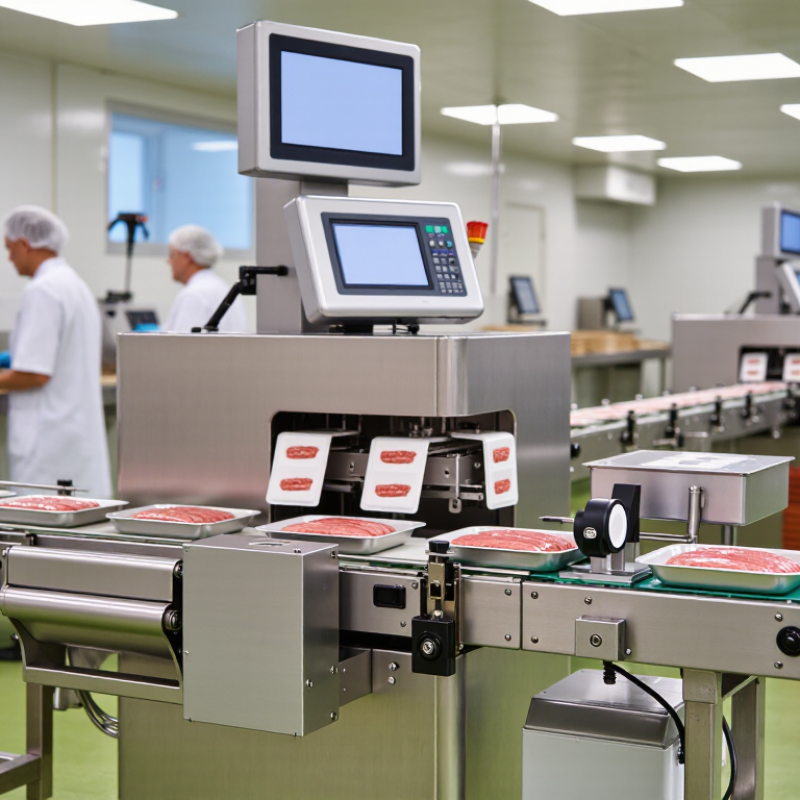
What Are Automatic Weigh Price Labelling Machines?
Automatic weigh price labelling machines combine weighing, pricing, and label printing in one production step. They identify a product’s weight through a load cell, calculate its price, and apply a label automatically. The label may show weight, unit price, total price, batch details, and a barcode.
These machines suit meat, produce, seafood, bakery items, and other packed goods. A conveyor moves each package across the weighing platform. Sensors check its position before printing. Thermal printers then apply labels to the top, side, or bottom surface. Accurate software settings help reduce manual entry and improve traceability. In my experience, stable conveyor speed matters as much as the scale itself. Small vibrations can affect results.
Calibration should match the operating environment and local measurement requirements. Operators need to inspect the scale, label roll, printer head, and reject mechanism regularly. Poorly stored labels may curl in humid rooms. That can cause placement errors. Hygiene also matters, especially where open food is handled. Stainless steel surfaces and easy-clean designs support safer maintenance.
These machines are efficient, but they are not magic. Product shape, moisture, and uneven packaging can still create problems. A rushed setup may produce incorrect labels. That risk deserves honest attention. Trial runs with real packages often reveal issues that specifications overlook. 马会
How Automatic Weigh Price Labelling Machines Work
An automatic weigh price labelling machine combines three tasks: weighing, calculating, and printing. A product moves across a load cell, which converts pressure into an electrical signal. The controller then matches the measured weight with the stored price per kilogram. It calculates the final amount and prints a label with weight, price, date, and product information.
The process is fast, but accuracy depends on stable handling. Vibrations, wet trays, or products touching the frame can distort readings. The operator should check zero balance and test weights during each production shift. Calibration records also support traceability.
The FAO reported that 13.2% of food was lost between harvest and retail in 2016, showing why controlled handling matters across the supply chain. Small weighing errors can become expensive when repeated thousands of times.
Label placement follows the product surface, often using a thermal printer and an automatic applicator. Sensors detect the tray position, while software confirms that the label matches the selected item.
The UNEP Food Waste Index Report 2024 estimated 1.05 billion tonnes of food waste in 2022. Better portion control may help, although machines cannot solve poor storage or careless inventory management.
That point is easy to overlook. In real facilities, staff training, cleaning routines, and regular verification remain as important as the machine itself.
Key Features and Selection Criteria
Choosing among China’s top ten automatic weigh price labelling machines requires more than comparing prices. Accuracy comes first. Look for stable load cells, automatic zero tracking, and clear calibration records. A practical target is consistent weighing within the required retail tolerance. Test real products, not only empty trays. Product shapes can change performance.
Speed matters on a busy packing line. Check the machine’s actual output with uneven items, wet surfaces, and different package sizes. A fast conveyor is useless if labels wrinkle or miss the target area. Thermal printers should support readable barcodes, durable print, and several label dimensions. Touchscreen controls should be simple enough for quick training. Keep language settings clear.
Hygiene and maintenance deserve close attention. Stainless steel contact areas, sealed controls, and an appropriate protection rating reduce cleaning risks. Ask how quickly operators can remove the label roll and access the printer. Spare parts availability also affects long-term reliability. Integration with scales, scanners, and production software can reduce manual entry errors. However, compatibility claims need a live demonstration.
I would also review calibration procedures, electrical safety documents, and local compliance requirements. A lower purchase price may hide expensive service delays. In one evaluation, a compact model looked ideal until its narrow conveyor rejected larger trays. That mistake was avoidable. Leave space for future product changes. No machine fits every factory perfectly.
China’s Top 10 Automatic Weigh Price Labelling Machines
China’s Top 10 Automatic Weigh Price Labelling Machines should be judged by measurable performance, not catalogue claims. Grand View Research estimated the global automatic labelling machine market at about USD 2.4 billion in 2023. It also projects steady growth through 2030. PMMI’s 2024 packaging automation research highlights labour shortages, faster changeovers, and production data integration as key purchasing pressures.
A practical comparison of ten Chinese machines should test 30 packages, from 100 grams to 5 kilograms. Check weight deviation, label placement, print clarity, and rejection response. A strong system should connect with barcode databases and preserve traceability. GS1 guidance also makes barcode quality and data accuracy essential for retail scanning. Speeds above 80 packages per minute look attractive, but unstable feeding can reduce real output. Slow testing matters.
Operators should inspect stainless-steel surfaces, tool-free adjustments, thermal printer access, and cleaning gaps. Software deserves equal attention. Interfaces that display alarms clearly reduce training mistakes. However, supplier specifications are not independent proof. The ranking remains provisional without factory acceptance records, calibration history, and local service response times. That is an uncomfortable weakness. A lower-speed machine may deliver better value when products vary in size, shape, or moisture. In real production, consistency usually beats impressive numbers.
China Top 10 Automatic Weigh Price Labelling Machines - China’s Top 10 Automatic Weigh Price Labelling Machines
Comparative reference table based on commonly published specifications for commercial automatic weigh-price labelling equipment.
| Rank | Machine Configuration | Typical Application | Weighing Range | Typical Accuracy | Throughput | Label Width | Product Size Compatibility | Printing Method | Key Strength |
|---|---|---|---|---|---|---|---|---|---|
| 1 | Standard conveyor weigh-price labeller | Prepacked meat, poultry, seafood and fresh produce | 20 g–6 kg | Typically ±1–3 g | Up to 45 packs/min | 30–120 mm | Small to medium packs | Thermal transfer or direct thermal | Balanced performance for general production lines |
| 2 | High-speed automatic weigh-price labeller | High-volume retail food packaging | 50 g–5 kg | Typically ±1–2 g | Up to 80 packs/min | 40–110 mm | Uniform trays and flow-wrapped packs | Direct thermal | High line speed with automatic data processing |
| 3 | Multi-lane weigh-price labeller | Ready-to-eat meals, vegetables and prepared foods | 30 g–3 kg | Typically ±1–2 g | Up to 100 packs/min | 30–100 mm | Small and medium rectangular packs | Direct thermal | Improves output where products can be divided into lanes |
| 4 | Top-and-bottom labelling system with weighing | Retail trays requiring labels on two surfaces | 50 g–5 kg | Typically ±1–3 g | Up to 50 packs/min | 30–100 mm | Flat trays and rigid containers | Direct thermal or thermal transfer | Supports clear product, price and traceability presentation |
| 5 | Water-resistant stainless-steel weigh labeller | Wet-area meat, seafood and chilled-food processing | 20 g–6 kg | Typically ±1–3 g | Up to 45 packs/min | 30–120 mm | Moisture-resistant trays and wrapped products | Water-resistant direct thermal | Hygienic construction and easier washdown maintenance |
| 6 | Compact weigh-price labeller | Small processors, supermarkets and laboratory-scale lines | 10 g–3 kg | Typically ±1–2 g | Up to 25 packs/min | 25–90 mm | Small trays, pouches and boxes | Direct thermal | Low footprint and straightforward operation |
| 7 | Heavy-duty weigh-price labeller | Large meat cuts, bulk produce and industrial packs | 100 g–15 kg | Typically ±2–5 g | Up to 30 packs/min | 50–150 mm | Large trays, cartons and irregular products | Thermal transfer | Higher load capacity and reinforced conveying components |
| 8 | Modified-atmosphere packaging line labeller | MAP trays and sealed chilled-food packages | 50 g–6 kg | Typically ±1–3 g | Up to 45 packs/min | 30–120 mm | Sealed trays with controlled product positioning | Direct thermal | Integrates product data with packaged-food traceability |
| 9 | Vision-assisted weigh-price labeller | Products needing position, orientation or code verification | 30 g–6 kg | Typically ±1–3 g | Up to 40 packs/min | 30–120 mm | Regular trays and coded packages | Direct thermal with camera verification | Helps detect missing, misplaced or unreadable labels |
| 10 | ERP-connected automatic weigh-price labeller | Traceable production and retail distribution operations | 20 g–6 kg | Typically ±1–3 g | Up to 50 packs/min | 30–120 mm | Small to medium packaged products | Direct thermal with network connectivity | Supports centralized product, price and production-data management |
Note: Actual capacity, accuracy, speed and label dimensions depend on product shape, conveyor layout, packaging material, operating conditions and local legal metrology requirements.
Applications, Maintenance, and Safety Considerations
China Top 10 Automatic Weigh Price Labelling Machines: Applications, Maintenance, and Safety Considerations
Automatic weigh price labelling machines support supermarkets, meat processors, seafood counters, and prepared-food facilities. They weigh each package, calculate its price, and print information such as weight, date, and barcode. This reduces manual entry errors during busy production periods. A crowded packing line needs stable performance. Before installation, confirm product size, moisture levels, label material, and required data formats. These details often determine whether a machine performs reliably.
Daily maintenance should begin with cleaning. Remove food residue from the weighing platform, conveyor, sensors, and print head. Use approved cleaning materials and avoid spraying liquid near electrical parts. Check label alignment, roller tension, and printer temperature during every shift. Calibrate the scale with certified test weights at scheduled intervals. Keep a written maintenance log. Do not guess. In practice, operators sometimes clean visible surfaces but overlook the load cell area. That small mistake can create inaccurate readings and unnecessary rework.
Safety requires trained operators, clear guards, and an accessible emergency stop. Keep hands away from moving conveyors and applicators. Disconnect power before clearing jams or servicing internal parts. Inspect cables, plugs, and protective covers for damage. Wet floors also increase slipping and electrical risks. Follow the machine manual and applicable local requirements, especially for weighing accuracy, food hygiene, and electrical protection. A short training session helps, but repeated observation matters more. Real production is imperfect, so supervisors should review near misses and adjust procedures.
China Top 10 Automatic Weigh Price Labelling Machines: Applications, Maintenance, and Safety Considerations
The chart shows practical maintenance intervals commonly used when planning the operation of automatic weigh price labelling machines. Actual schedules should follow the machine manual, production environment, product characteristics, and local safety requirements.
Daily cleaning helps prevent product residue from affecting weighing and labelling accuracy. Weekly inspections focus on sensors, label alignment, and conveyor condition. Calibration checks, belt inspections, and electrical safety inspections should be documented and completed by trained personnel.