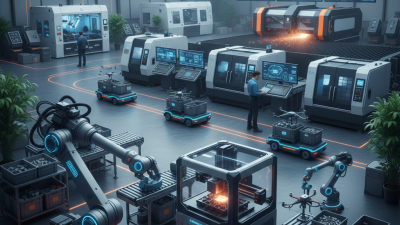
Top 10 Equipment Manufacturing Companies in the World
Equipment manufacturing is more than steel frames and production lines. It supplies the presses, turbines, machine tools, and automated systems that keep factories, farms, construction sites, and energy networks running. The companies behind these machines compete on reliability, service reach, engineering depth, and their ability to adapt equipment to demanding working conditions.
Automation offers one measure of how quickly the industry is changing. The International Federation of Robotics’ World Robotics 2024 report recorded 541,302 industrial robots installed worldwide in 2023, with 4.28 million operating in factories. These figures describe robot adoption, not the whole equipment market. Still, they show why manufacturers increasingly value machines that connect physical production with sensors, software, and skilled operators. A robot arm on an assembly line is only one visible part of a much larger investment.
This Top 10 overview compares leading equipment manufacturers by global presence, product range, innovation, and influence across key industries. Company scale alone does not tell the full story. A compact specialist can outperform a giant in one application, while a broad supplier may offer stronger service coverage. No ranking is perfect. Market definitions differ, private-company data can be limited, and performance varies by region. The aim here is a grounded starting point: a clear look at the businesses shaping modern industrial capacity, and the practical strengths that distinguish them.
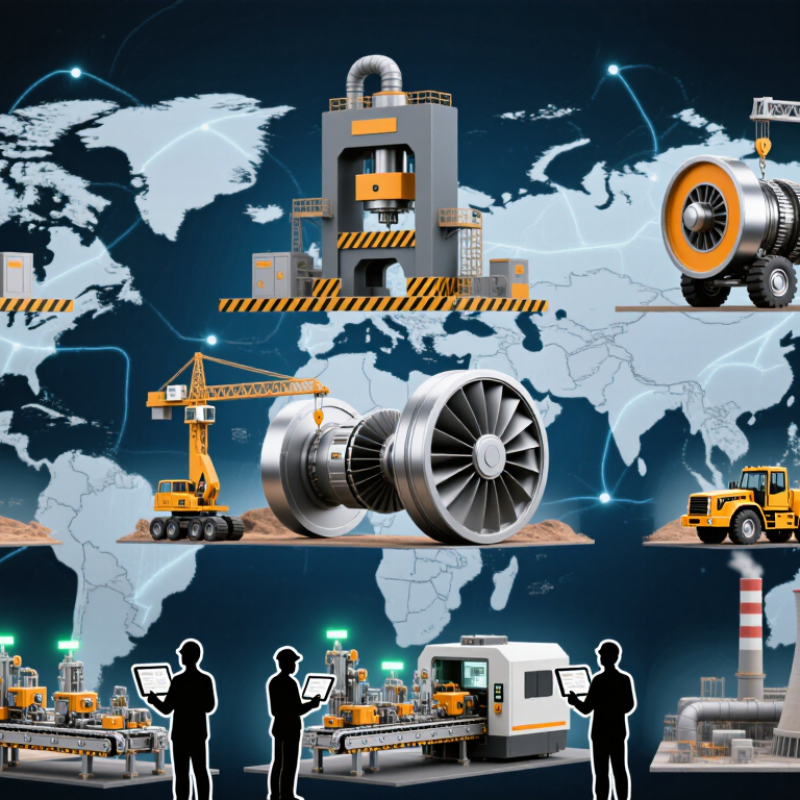
Definition and Scope of the Global Equipment Manufacturing Industry
The global equipment manufacturing industry covers businesses that design and produce machines, tools, and systems used to make, move, build, or process goods. Its scope ranges from compact workshop tools to large production lines, construction machinery, and agricultural equipment. A factory conveyor, a hydraulic excavator, and a grain harvester serve different markets, yet all rely on engineered equipment. These products often combine metal structures, motors, sensors, and control systems.
The boundaries are not always clear. A company may manufacture complete machines, key components, or both, while also providing installation, maintenance, and replacement parts. These services matter because equipment can operate for decades, and downtime may halt an entire production shift. A useful industry comparison should state which products and services it includes. Otherwise, rankings can mix unlike businesses. That weakens the comparison. Company scale may be measured by revenue, output, workforce, or geographic reach, and each measure tells a different story. Definitions also shift as automation and digital monitoring become standard features. The category is broad, sometimes awkwardly so, but clear scope makes comparisons more reliable.
Criteria for Identifying the World’s Leading Equipment Manufacturers
A credible ranking of equipment manufacturers should measure more than annual sales. Compare production capacity, delivery reliability, product lifespan, service coverage, and energy use per operating hour. A machine that runs reliably across three shifts can matter more than a large factory footprint. So can access to replacement parts within days, not weeks.
The International Federation of Robotics’ World Robotics 2024 report recorded 541,302 industrial robot installations in 2023, 4% below the previous year’s record. The global operating stock still reached about 4.28 million units. These figures make automation readiness a useful comparison point, but robot adoption alone does not prove equipment quality. ISO’s 2022 Survey counted 1,265,216 valid ISO 9001 certificates worldwide. Certification can indicate structured quality controls, not flawless output. That distinction matters.
Strong assessments should also examine warranty response times, safety records, repairability, and verified emissions data. Ask how quickly a service team can diagnose a stalled production line, and whether spare components are stocked near customers. Still, public data are uneven. Some manufacturers disclose detailed lifecycle figures; others do not. A ranking may therefore reward transparency as well as performance, though the two are not quite the same.
Profiles of Ten Major Equipment Manufacturing Companies
Profiles of ten major equipment manufacturers are most useful when they explain what each builds and how it competes. A construction-equipment maker is judged by machine uptime on rough sites; an agricultural-equipment producer by reliability during narrow harvest windows. Mining machinery must withstand abrasive dust, while machine-tool companies depend on precision measured in microns. Other profiles can cover industrial robots, packaging lines, lifting systems, power-generation equipment, process machinery, and semiconductor-production tools. The details matter: a worn cutting head, a delayed spare part, or a poorly calibrated sensor can stop a production line.
Industry data gives these profiles useful context. The International Federation of Robotics’ World Robotics 2024 report recorded
4.28 million industrial robots operating worldwide in 2023, with 541,302 new installations that year.
That scale helps explain why automation capabilities feature prominently in equipment-maker evaluations. Still, robot totals do not reveal service quality, energy use, or how easily equipment fits an older factory. A profile should distinguish reported figures from on-site performance; published comparisons are not always apples to apples.
Tips: Compare total operating cost, not just purchase price. Ask how quickly common replacement parts arrive, and check maintenance requirements against real shift patterns. Shorter downtime matters. One caveat: without comparable field data, even a polished company profile can leave important questions unanswered.
Key Products and Markets of the Top Manufacturers
Across the world’s leading equipment manufacturers, product lines cluster around construction, mining, agriculture, and factory production. Construction divisions supply excavators, loaders, cranes, and road-building machines for contractors, public works agencies, and rental fleets. Buyers compare lifting capacity, fuel use, uptime, and access to replacement parts, not just purchase price. A machine stopped on a muddy site can delay an entire crew.
Mining-focused manufacturers build haul trucks, drilling systems, crushing equipment, and underground machines for mineral producers. Their markets depend on commodity investment and harsh operating conditions; component life matters greatly. Farm equipment ranges from tractors and combines to precision planting tools, serving large commercial farms as well as smaller operators. Harvest windows are short. Even a reliable machine can feel costly when local repair support is weak.
Other major manufacturers supply pumps, compressors, turbines, material-handling systems, and automated production equipment. These products reach energy, logistics, food processing, and general manufacturing customers. Some groups also sell monitoring software and maintenance contracts, creating recurring service revenue. Yet digital features are not useful everywhere: patchy connectivity and older facilities can limit their value. Markets differ. Category labels look neat; real customer needs rarely do.
Global Influence and Industry Trends in Equipment Manufacturing
Equipment manufacturing influences how quickly industries can build, move, and maintain essential goods. Large producers shape supply chains through machine design, component sourcing, and access to technical support. Their decisions affect factories far beyond their home markets. A production line in one country may depend on sensors, motors, and service teams from several others.
Small changes matter. More efficient motors can reduce energy use during long operating shifts. Automated inspection can catch a misaligned part before it disrupts an entire batch. At the same time, automation is not a universal fix. Smaller factories may lack the trained staff, stable connectivity, or capital needed to use advanced systems well. The gap is real.
Industry trends now favor connected equipment, predictive maintenance, and lower-emission production. Sensors can flag unusual vibration before a bearing fails, giving maintenance teams time to plan a repair. Digital models also help engineers test designs before building physical prototypes. Still, software predictions depend on clean, representative data. That weakness is easy to overlook. Regional manufacturing is growing as companies seek shorter delivery routes and more resilient supply networks, but local production still needs dependable parts and skilled technicians. Progress is practical, uneven, and shaped by the needs of each factory.