Top 10 Types of Machines in the Machine Industry for Buyers

Buying industrial equipment is rarely about choosing the biggest machine. It is about matching capability, accuracy, uptime, and service support to a real production need. The machine industry now covers a wide field, from CNC machining centers and industrial robots to injection molding machines, packaging systems, and additive manufacturing equipment.

The International Federation of Robotics reported 541,302 industrial robots were installed worldwide in 2023. Its World Robotics 2024 report also recorded more than 4.28 million operational industrial robots. These figures show how quickly automation is entering factories. Yet automation is not always the best answer. A small workshop may gain more from a reliable CNC lathe than from an expensive robotic cell.

Deloitte’s 2024 Smart Manufacturing and Operations Survey found that 86% of manufacturing leaders expect smart manufacturing to become a major competitiveness driver within three years. That expectation raises practical questions about integration, maintenance, operator training, and cybersecurity. Buyers should examine the full ownership cycle, not only the catalog price. Ask about cycle time, tolerance, energy use, spare parts, and local technical support. Touch the machine. Watch it run.

The following guide presents the top 10 types of machines in the machine industry for buyers. Each category has different strengths, limitations, and investment risks. Some descriptions may simplify complex factory decisions. That is intentional. Real purchasing decisions need plant data, supplier testing, and advice from qualified engineers. A polished brochure cannot replace production evidence.
Top 10 Types of Machines in the Machine Industry for Buyers

Defining Industrial Machines and Their Role in Manufacturing

Industrial machines are powered systems that transform materials, energy, or digital instructions into useful production work. They include CNC machines, lathes, milling machines, presses, injection molding machines, welding equipment, laser cutters, conveyors, packaging machines, and inspection systems. Each type performs a defined task with measurable output.

Their role is practical and demanding. A CNC machine can shape steel within tight tolerances, while a press forms sheet metal with controlled force. Injection molding equipment creates repeatable plastic parts, often in seconds. Conveyors move components between workstations, reducing unnecessary lifting and delays. Inspection systems use cameras or sensors to detect scratches, incorrect dimensions, or missing parts before shipment.

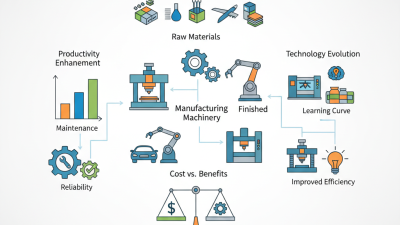
Good manufacturing depends on matching the machine to the material, volume, and tolerance. Engineers also assess cycle time, energy use, guarding, maintenance access, and operator training. A fast machine is not always the best machine. It may create excessive waste or difficult repairs. Experienced maintenance teams check vibration, heat, lubrication, and unusual noise before small faults become expensive downtime. Records matter, though they are sometimes incomplete. That weakness deserves attention.

Buyers should request clear specifications, test sample parts, safety documentation, and service information. They should also consider floor space, power requirements, spare components, and software compatibility. In real factories, practical reliability often matters more than impressive speed. A machine that runs steadily through a long shift can support quality better than one that frequently needs adjustment.

Top 10 Types of Machines in the Machine Industry for Buyers

Defining industrial machines and their role in manufacturing

The chart compares common controlled-axis or motion configurations used in standard industrial equipment. More axes generally support more complex positioning and part geometries, while the appropriate machine depends on material, tolerance, production volume, and process requirements. Actual configurations vary by machine design.

Classifying Machines by Function, Design, and Production Use

Machine buyers can classify equipment by what it does, how it is built, and where it fits in production. CNC machining centers remove material through programmed cutting. Lathes rotate workpieces for turning. Drilling machines create precise holes. Grinding machines improve surface finish and tolerance. Cutting systems separate sheets, bars, or composite materials. Forming machines shape metal through pressing, bending, or rolling. Joining equipment uses welding, fastening, or controlled bonding. Thermal-processing machines alter hardness, stress, or structure. Additive machines build parts layer by layer. Material-handling and inspection systems move, measure, and verify products.

Function is only one buying filter. Design matters too. A modular machine supports upgrades, while a dedicated machine may deliver faster cycle times. Manual, semi-automatic, and fully automated designs suit different labor conditions and production volumes. The International Federation of Robotics reported 541,302 industrial robot installations worldwide in 2023, showing how automation increasingly connects handling, inspection, and machining. Yet automation is not always economical.

Use case decides the final choice. Job shops often value flexible CNC platforms and quick tooling changes. High-volume factories may prefer forming, joining, or dedicated thermal equipment. Energy demand deserves attention. The International Energy Agency’s Energy Efficiency 2023 report identified industry as responsible for nearly 40% of global final energy consumption. Efficient motors and shorter idle cycles can reduce operating costs. A neat taxonomy helps, but it is never perfect. Buyers should test real materials, inspect maintenance access, and compare total ownership cost. Catalog specifications alone can mislead.

Top 10 Industrial Machine Types and Their Primary Applications

Industrial buyers usually compare machines by workload, material, accuracy, and maintenance access rather than appearance. In production reviews, CNC machines handle programmed cutting for repeatable metal parts, while lathes rotate workpieces for shafts, bushings, and cylindrical components. Milling machines remove material from fixed parts and create slots, faces, and complex contours. Presses apply controlled force to form, stamp, or bend sheet metal. Their capacity must match material thickness and expected cycle frequency.

Injection molding machines force heated polymer into molds for housings, containers, and technical components. Laser cutting machines deliver focused heat for fast, clean profiles in sheet metal, plastics, and selected composites. Grinding machines refine surfaces where tight tolerances and low roughness matter. Welding machines join prepared metal sections for frames, tanks, pipelines, and structural assemblies. Ventilation, operator training, and joint inspection remain essential, even when equipment looks highly automated.

Conveyors move materials between workstations, reducing lifting and uneven flow. Industrial robots support pick-and-place, palletizing, coating, and repetitive assembly tasks. They need safe guarding, reliable programming, and clear recovery procedures. Buyers should test sample parts, measure power demand, and verify spare-part availability before signing. A machine can meet its brochure rating and still disappoint on a crowded factory floor. I once underestimated changeover time; the hidden delay outweighed the advertised speed. That lesson still influences equipment selection.

Top 10 Types of Machines in the Machine Industry for Buyers

Rank Industrial Machine Type Core Function Primary Applications Common Materials Processed Typical Output or Capacity Key Buying Consideration
1 CNC Machining Centers Computer-controlled cutting, drilling, milling, and contouring of precision parts. Automotive components, aerospace parts, industrial tooling, medical components, and general engineering. Aluminum, steel, stainless steel, brass, titanium, plastics, and composites. Work envelopes commonly range from approximately 400 × 300 mm to more than 2,000 × 1,000 mm; production may range from prototype quantities to high-volume batch manufacturing. Spindle speed, number of axes, working envelope, positioning accuracy, tool capacity, automation options, and control compatibility.
2 CNC Lathes and Turning Centers Rotates a workpiece while cutting tools remove material to create cylindrical or rotational components. Shafts, bushings, bolts, fittings, rollers, threaded parts, hydraulic components, and bearing seats. Steel, stainless steel, aluminum, brass, bronze, cast iron, and engineering plastics. Typical swing diameters range from about 300 mm to 1,000 mm, with bar capacities commonly ranging from 20 mm to more than 100 mm. Maximum turning diameter and length, chuck size, spindle power, bar-feed capability, live tooling, and cycle-time requirements.
3 Hydraulic Presses Uses hydraulic pressure to compress, form, bend, draw, stamp, or assemble materials. Metal forming, deep drawing, forging, plastic molding, rubber processing, laminating, and component assembly. Sheet metal, steel plate, aluminum, copper, rubber, plastics, and composite laminates. Industrial models commonly range from approximately 50 to 2,000 tons of pressing force, depending on the process and part size. Rated force, daylight opening, stroke length, bed dimensions, operating speed, pressure control, safety systems, and energy consumption.
4 Injection Molding Machines Melts plastic pellets and injects the material into a mold to produce repeatable shaped parts. Automotive interiors, consumer products, packaging components, electrical housings, medical disposables, and appliance parts. Thermoplastics such as polypropylene, polyethylene, ABS, nylon, polycarbonate, and PEEK. Clamping forces commonly range from about 50 to 4,000 tons; shot sizes vary from small precision parts to large structural components. Clamping force, injection volume, mold dimensions, cycle time, material compatibility, automation, and temperature-control performance.
5 Laser Cutting Machines Uses a focused laser beam to cut, engrave, or perforate sheet and plate materials with high precision. Sheet-metal fabrication, electrical enclosures, signage, HVAC components, automotive parts, and custom metalwork. Mild steel, stainless steel, aluminum, copper, brass, acrylic, wood, and selected engineering plastics. Flatbed systems commonly process sheets around 1,500 × 3,000 mm; fiber laser power often ranges from 1 to 20 kW for industrial cutting. Laser source, power rating, maximum material thickness, cutting speed, worktable size, assist-gas system, and operating cost.
6 Sheet Metal Press Brakes Bends sheet and plate metal into precise angles and profiles using a punch and die. Cabinetry, electrical panels, structural frames, vehicle parts, ductwork, and industrial enclosures. Mild steel, stainless steel, aluminum, galvanized steel, and copper alloys. Pressing capacities commonly range from approximately 40 to 1,000 tons, with bending lengths from about 1,250 mm to more than 6,000 mm. Bending force, working length, stroke, throat depth, back-gauge accuracy, tooling system, and CNC programming capability.
7 Industrial Robots Performs programmable, repeatable movements for handling, welding, assembly, painting, inspection, and palletizing. Arc welding, spot welding, machine tending, material handling, packaging, palletizing, painting, and quality inspection. Metal parts, plastic components, packaged goods, castings, and assembled products. Payloads commonly range from approximately 3 to 500 kg, with reach typically spanning about 500 to 3,500 mm. Payload, reach, repeatability, number of axes, protection rating, cycle time, end-of-arm tooling, safety integration, and programming requirements.
8 Industrial Compressors Generates and stores compressed air or gas for powering tools, controls, and production equipment. Pneumatic tooling, spray painting, packaging, textile production, food processing, instrumentation, and factory automation. Air and industrial gases; applications may involve metal, plastic, food, textile, and electronic products. Factory systems commonly deliver approximately 5 to 500 cubic meters per minute at pressures from about 5 to 40 bar, depending on configuration. Required flow and pressure, oil-free or lubricated design, duty cycle, air quality, noise level, energy efficiency, and maintenance access.
9 Industrial Mixers and Blenders Combines powders, granules, liquids, pastes, or viscous materials into a consistent formulation. Food and beverage production, pharmaceuticals, chemicals, paints, adhesives, plastics, cosmetics, and construction materials. Powders, grains, polymers, pigments, liquids, creams, cementitious materials, and chemical compounds. Batch capacities commonly range from approximately 5 liters for laboratory equipment to more than 10,000 liters for industrial production systems. Material viscosity, batch size, mixing uniformity, shear level, sanitary requirements, discharge method, cleaning needs, and explosion protection.
10 Conveyors and Material Handling Systems Moves raw materials, components, packages, and finished goods through production and warehouse areas. Assembly lines, distribution centers, packaging operations, mining, food processing, warehousing, and logistics. Boxes, cartons, pallets, bulk solids, metal parts, plastic products, food items, and packaged goods. Conveyor widths commonly range from about 300 to 2,000 mm, with speeds from a few meters per minute to more than 100 meters per minute. Load capacity, conveyor length, belt or roller design, speed control, layout flexibility, sanitation, safety guarding, and integration with automation.

Key Specifications Buyers Should Compare Before Purchasing

Top 10 Types of Machines in the Machine Industry for Buyers

Key Specifications Buyers Should Compare Before Purchasing

Machine selection should begin with the workpiece, not the sales brochure. Common choices include CNC machines, lathes, milling machines, presses, injection molding machines, cutting machines, grinders, welding machines, conveyors, and air compressors. Compare working capacity, material compatibility, dimensional accuracy, cycle speed, and rated power. A machine that handles steel may perform poorly with softer or heat-sensitive materials.

Check the usable work area carefully. A listed size may include space that tools cannot reach. Ask for repeatability data, tolerance results, and testing conditions. Controls should be easy to operate, update, and protect with user access levels. Safety systems matter too, including guarding, emergency stops, noise control, and thermal protection. Do not treat safety as an optional feature.

Operating cost often changes the purchase decision. Compare energy consumption, tooling costs, maintenance intervals, spare-part availability, and technician requirements. In plant inspections, I have seen machines with excellent output lose money through long setup times. That detail is easy to miss. Footprint and foundation requirements also affect installation. Buyers should request a realistic sample test using their own material and process. Published figures can look precise, but real production conditions may reduce speed or accuracy. I would also record rejected parts during testing, because one successful sample proves very little.

Safety, Maintenance, Costs, and Supplier Selection Considerations

Buyers rarely fail because they cannot name the equipment. Problems start when safety, maintenance, and supplier support receive less attention. Common choices include CNC machines, lathes, milling machines, presses, grinders, injection molding machines, laser cutters, conveyors, compressors, and industrial robots. Each machine creates different pinch, heat, noise, dust, or stored-energy hazards. Request a documented risk assessment, guarding details, emergency-stop testing, and operator training. Confirm local compliance requirements with a qualified professional. Do not guess.

Maintenance planning should begin before installation. Ask for service intervals, spare-part lead times, lubrication points, diagnostic access, and recommended technician skills. During a site review, inspect cable routing, access panels, floor anchors, and cleaning space. Small access problems become expensive downtime. Compare total cost of ownership, not only the invoice. Include energy use, tooling, consumables, calibration, training, waste handling, and planned shutdowns. A cheaper machine can consume more electricity or require difficult imported parts. That mistake is easy to make.

Supplier selection needs evidence. Evaluate technical drawings, factory test procedures, warranty boundaries, response times, installation records, and references from similar applications. Require clear acceptance criteria for accuracy, output, noise, and safety functions. Ask who owns software, passwords, manuals, and future modifications. One overlooked question can delay commissioning for weeks. Keep a written comparison. An honest review should include uncertainty. Production volume may change, operators may need more training, and maintenance budgets may prove unrealistic. Leave room for those findings before signing.