China Top 10 Machinery Machine Suppliers?
China Top 10 Machinery Machine Suppliers? This question sounds simple, yet the answer requires careful industry judgment. China’s machinery sector covers CNC equipment, construction machinery, agricultural machines, robotics, and complete production lines. These categories have different standards, buying cycles, and technical risks.
Recent industry data shows why China deserves close attention. The China Machinery Industry Federation reported continued growth in machinery manufacturing during 2023, supported by automation, new energy equipment, and industrial upgrading. The International Federation of Robotics also recorded 276,288 industrial robot installations in China in 2023, representing more than half of global installations. These figures indicate strong production depth, not automatic supplier quality.
This guide evaluates ten machinery machine suppliers through practical criteria. These include product reliability, export experience, certification, after-sales support, spare-parts access, and engineering capability. Company scale matters. It is not everything. A large factory may still provide slow technical support or inconsistent documentation. A smaller specialist may offer better customization and faster communication.
Public sources such as annual reports, the China Machinery Industry Federation, the International Federation of Robotics, and UN Comtrade provide useful evidence. However, export statistics do not fully reveal service quality, warranty performance, or factory inspection results. That limitation deserves attention. Rankings can become outdated quickly. Readers should verify current models, certifications, production capacity, and customer references before purchasing. A supplier’s polished showroom is only one small piece of the machinery machine story.
China’s Machinery Industry in Numbers: NBS Output, Exports, and R&D Data
China Top 10 Machinery Machine Suppliers?
China’s machinery sector is best judged through production, exports, and research data. According to the National Bureau of Statistics, equipment manufacturing value added grew by 6.8% in 2023. It represented 34.6% of China’s industrial value added. These figures show scale, but not every supplier has equal technical depth.
Trade data adds another useful view. In 2023, China exported about 13.92 trillion yuan in mechanical and electrical products, accounting for 58.6% of total exports. This category is broader than machinery alone. That distinction matters. Mixing customs categories can make a supplier list look more precise than it really is. In practical sourcing work, buyers should check product codes, installed capacity, export records, and after-sales coverage.
Research spending also changes the picture. China’s national R&D expenditure reached roughly 3.33 trillion yuan in 2023, with R&D intensity at 2.64% of GDP. Machinery suppliers investing in testing labs, automation software, energy efficiency, and process engineering may offer stronger long-term value. Still, R&D claims need evidence. Ask for test reports, patent ownership, factory audit records, and recent delivery references. A polished website is not proof. Some comparisons remain imperfect because public statistics combine large manufacturers with smaller specialists.
How the Top 10 Suppliers Are Ranked by Revenue, Exports, R&D, and Certifications
China’s top machinery suppliers should be ranked through evidence, not visibility. Revenue is the first filter, using audited annual reports and China’s National Bureau of Statistics data. Export strength can then be checked against UN Comtrade records for HS 84 and HS 85 machinery categories. These categories include industrial equipment, engines, electrical systems, and production tools. Export value shows market reach, but it does not always show product quality.
A stronger ranking combines four measures: 35% revenue, 25% exports, 25% R&D, and 15% certifications. OECD R&D statistics help compare research intensity, while WIPO data indicates patent activity and technology development. Certification evidence should come from valid ISO 9001, ISO 14001, and ISO 45001 records. The ISO Survey is useful here. Still, certificate counts can mislead. A large number may reflect company size, not superior engineering.
Practical checks matter. Reviewers should inspect factory capacity, testing equipment, delivery records, and after-sales response times. A supplier with automated machining lines and traceable inspection reports deserves more confidence. Export data can also contain trading-company activity, which weakens direct comparisons. The ranking therefore needs yearly updates and independent verification. Revenue remains important, but it can hide debt, subcontracting, or weak margins. R&D spending may also include broad corporate research rather than machinery innovation. That is an uncomfortable limitation.
Top 10 Chinese Machinery Suppliers by Product Segment and Global Market Reach
China Top 10 Machinery Machine Suppliers
China’s leading machinery suppliers are better compared by product segment and global market reach. The strongest ten categories include construction equipment, CNC machine tools, agricultural machinery, textile systems, packaging lines, plastic-processing machines, mining equipment, material-handling systems, food-processing machinery, and renewable-energy production equipment.
Their export strengths differ. Construction and agricultural machinery often serve Southeast Asia, Africa, and Latin America. CNC, packaging, and textile equipment reach Europe and the Middle East through distributors and technical partners. Mining and material-handling suppliers usually compete through project customization, field service, and spare-parts availability. Food-processing and plastic machinery gain trust when suppliers provide stable output, clear manuals, and documented safety testing.
Experience shows that price alone is a weak selection tool. Factory audits should check machining accuracy, welding quality, software controls, and final inspection records. Ask for recent installation references, not old photographs. A supplier may claim global coverage yet have limited local support. That gap matters. Certification documents also require careful verification because paperwork can be incomplete or outdated. No ranking is perfect. Market reach changes with freight costs, regional regulations, service capacity, and currency pressure. Buyers should compare warranty terms, response times, replacement-part stock, and operator training before signing a contract. Performance data from a real production site remains more convincing than a polished catalog.
Factory Scale, Production Capacity, and Quality Systems: Comparing the Leaders
China Top 10 Machinery Machine Suppliers?
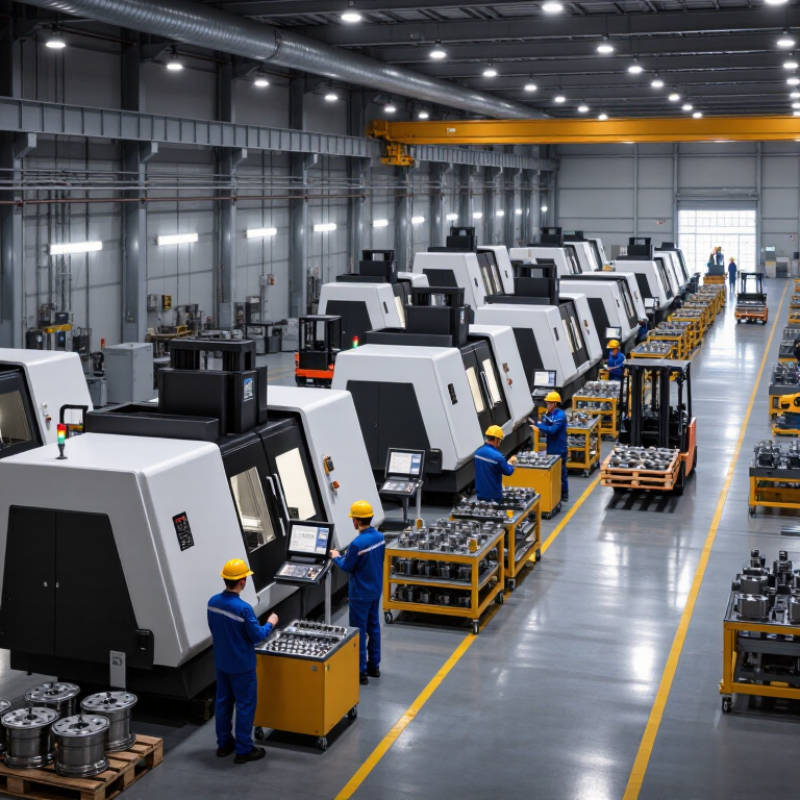
Comparing China’s leading machinery suppliers requires more than counting factory buildings. A large site may still hide weak production control. During a factory audit, inspect assembly bays, machining centers, storage areas, and testing rooms. Note whether materials move through marked routes. Clean floors help, but process discipline matters more.
Production capacity should be measured through machines, shifts, skilled workers, and recent delivery records. Ask for monthly output data, not impressive annual estimates. Check how the supplier handles peak orders. Can it maintain accuracy when several lines run together? A useful test involves reviewing sample production schedules, inspection reports, and equipment maintenance logs. Capacity without stable scheduling creates delays.
Quality systems reveal operational maturity. Look for incoming material checks, in-process measurements, final testing, and documented corrective actions. Traceability should connect each finished machine to components, operators, and inspection results. International quality certifications can support credibility, but certificates alone prove little. Audit the actual records. Speak with technicians, not only sales staff.
Some suppliers provide excellent prototypes but struggle with repeated production. That weakness is easy to miss. Ask for customer references from similar machine types and comparable order volumes. Review packaging methods, spare-parts support, and response times after delivery. A supplier with moderate factory scale may outperform a larger competitor through tighter supervision. My own evaluation would still include uncertainty, because public capacity figures are rarely fully transparent. Testing one production unit remains wiser than trusting polished presentations.