Who Are the Top Butterfly Valve Manufacturers in China?
China is a major manufacturing base, but production scale alone does not identify the right Butterfly Valve supplier. The World Steel Association’s World Steel in Figures 2024 reports that China produced 1,019.1 million tonnes of crude steel in 2023, roughly 54% of global output. This signals substantial industrial capacity, not guaranteed valve quality. Buyers still need to examine materials, testing, and traceable inspection records.
Demand also matters. Grand View Research’s Industrial Valves Market report tracks butterfly valves within a wider market shaped by water treatment, energy, and process industries. Its findings offer useful context, but broad market forecasts cannot verify an individual factory’s performance. That distinction is easy to miss. A practical comparison should check pressure and temperature ratings, body and disc materials, seat design, actuator options, and relevant standards such as API 609 or EN 593. Ask for documented test results, not just a polished catalogue. Where possible, review sample lead times and after-sales response too.
This guide looks at leading Chinese manufacturers through those practical measures, alongside product range, export experience, and technical support. No shortlist is perfect. Company capabilities change, and public information can be incomplete. Treat rankings as a starting point, then confirm specifications against your actual service conditions. A valve destined for a clean-water line may not suit abrasive slurry or a high-temperature process. The details matter.
What Is a Butterfly Valve and How Does It Work?
A butterfly valve controls flow with a circular disc mounted inside a pipe. The disc connects to a stem, which turns through the valve body. A handle, gearbox, or actuator usually rotates it about 90 degrees. When the disc turns parallel to the flow, fluid passes through. Turn it across the flow, and the disc restricts or stops it. Simple, but not magic.
The compact design saves space, and the quarter-turn action allows quick operation. In a real pipeline, though, a partly open disc can create turbulence and pressure loss. Some butterfly valves are suitable for flow regulation, but they may not provide precise control in every system. The seat material also matters. It must suit the fluid, operating temperature, and pressure; a mismatch can lead to leakage or early wear.
When assessing a valve made in China, check its drawings, material specifications, pressure rating, and test records rather than relying on appearance alone. Confirm the connection style and face-to-face dimensions before installation. A neat product photo cannot show whether the disc clears nearby pipework or whether the seat fits the service conditions. That detail is easy to overlook, even by experienced buyers.
China’s Butterfly Valve Manufacturing Industry
Who Are the Top Butterfly Valve Manufacturers in China?
China’s Butterfly Valve Manufacturing Industry
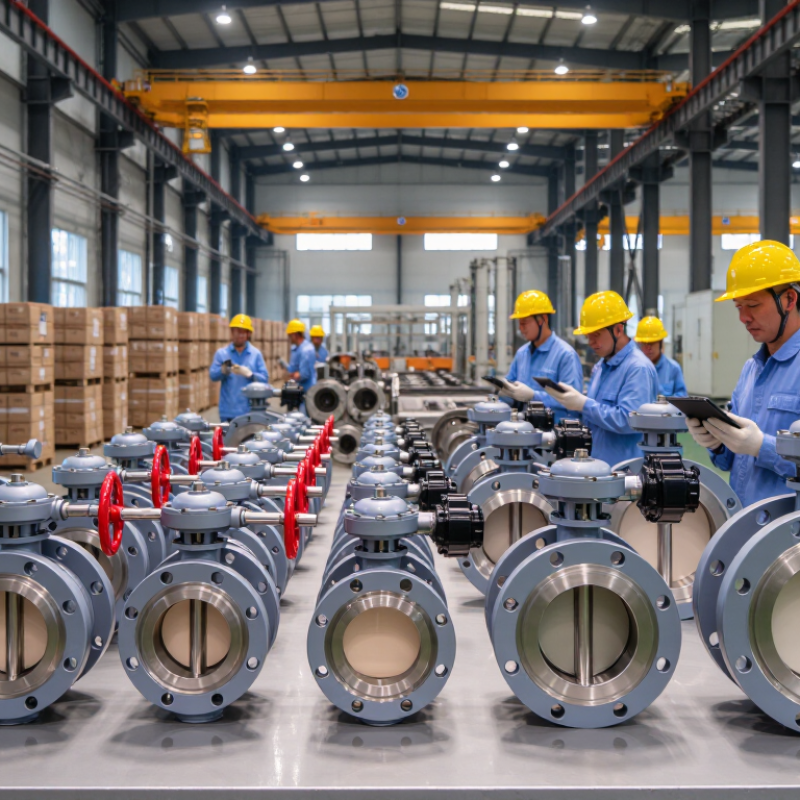
China’s butterfly valve manufacturing industry brings together metalworking, machining, assembly, and testing. Production ranges from compact valves for building services to larger units used in water and process systems. A workshop floor may hold cast valve bodies, stainless-steel discs, and rows of stems awaiting inspection. Details matter. A slightly uneven sealing surface can affect shutoff performance.
Manufacturers often select materials according to the fluid, temperature, pressure, and operating conditions. Machining accuracy, coating quality, and seat installation all influence service life. Many facilities use pressure tests to check finished valves before shipment. Buyers should ask how tests are documented and whether inspection records match the supplied model. A catalogue alone is not enough.
The industry’s scale supports varied specifications and production volumes, but capability differs between factories. Some specialize in standard designs; others handle custom dimensions or materials. Still, a neat sample does not prove consistent batch quality. It is worth reviewing drawings, material certificates, test procedures, and packaging before placing an order. Even careful checks may miss something. That is a useful reminder: valve selection depends on the actual system, not just the price or delivery promise.
Major Chinese Butterfly Valve Manufacturers and Their Specialties
China’s butterfly valve makers often specialize by material, pressure range, and production scale. Some focus on resilient-seated valves for water treatment and building services. Others machine metal-seated designs for hotter, more demanding process lines. A useful comparison starts with the service conditions, not a catalogue’s broadest claim.
For municipal projects, manufacturers may offer ductile-iron bodies, epoxy coatings, and rubber seats. These details matter when valves face wet shafts, frequent cycling, or mildly abrasive water. Industrial suppliers may instead emphasize stainless-steel trim, tighter machining tolerances, and actuator-ready mounting pads. Ask how the seat performs after repeated operation. A sample inspection can reveal uneven edges or rough coating near the flange.
Large-volume producers may provide standard dimensions and predictable lead times. Smaller specialist factories can sometimes adjust materials or connection details for a particular installation. But flexibility is not proof of quality. Request pressure-test records, material traceability, and clear drawings before comparing quotations. The paperwork can be messy. That deserves a second look. Also confirm whether the stated pressure rating applies to the body, the seat, or both. Those distinctions are easy to overlook, especially when a project is moving quickly.
Who Are the Top Butterfly Valve Manufacturers in China? - Major Chinese Butterfly Valve Manufacturers and Their Specialties
This comparison summarizes common specialty areas and typical product capabilities among Chinese butterfly valve suppliers. Figures are indicative industry ranges, not specifications for any particular manufacturer; confirm exact requirements with the supplier.
| Manufacturer Specialty | Typical Valve Design | Common Size and Pressure Range | Typical Materials and Seat Options | Common Applications | Useful Standards to Check |
|---|---|---|---|---|---|
| General-purpose water and HVAC valves | Concentric, resilient-seated wafer, lug, or flanged butterfly valves | Often DN50–DN1200; commonly PN10 or PN16, with Class 150 options | Ductile iron or cast iron body; EPDM or NBR seat; ductile iron or stainless-steel disc options | Water distribution, building services, cooling-water systems, and low-pressure process lines | EN 593; API 609; ISO 5752; applicable GB/T product requirements |
| Industrial process and higher-performance valves | Double-eccentric (high-performance) butterfly valves, commonly wafer, lug, or flanged | Often DN50–DN2000; pressure classes vary, with PN10–PN25 and Class 150–300 options common in product ranges | Carbon-steel or stainless-steel body; stainless-steel disc; PTFE, reinforced PTFE, or elastomer seats | General process service, utilities, pulp and paper, and selected chemical applications | API 609; EN 593; ASME B16.34 where specified; pressure and temperature limits for the selected seat |
| High-temperature or tight-shutoff service | Triple-offset, metal-seated butterfly valves | Available in a wide range of sizes; product offerings may extend from DN50 to large-bore sizes, with pressure classes selected by design | Carbon steel, stainless steel, or alloy steel; metal-to-metal sealing surfaces, sometimes with hard-facing | Steam, hot oil, gas, power generation, and other services requiring metal seating | API 609; ASME B16.34 where applicable; relevant fire-safe or emissions requirements when specified |
| Large-diameter waterworks valves | Large-bore resilient-seated or double-eccentric butterfly valves, often flanged | Commonly supplied from several hundred millimetres to multiple metres in diameter; pressure is often in the low-to-medium range and must be confirmed per design | Ductile iron or fabricated steel body; elastomer seat; coated internal and external surfaces may be offered | Water treatment plants, pumping stations, reservoirs, and municipal transmission pipelines | AWWA C504 for applicable waterworks designs; EN 593; ISO 5752; project-specific coating requirements |
| Corrosion-resistant and lined valves | Resilient-seated or lined butterfly valves with protected wetted surfaces | Often offered in small- to medium-bore sizes, commonly up to around DN600; allowable pressure depends on lining, temperature, and construction | PTFE or other specified lining; stainless-steel or coated body options; seat materials selected for the fluid | Corrosive chemicals, water treatment, and selected acids or alkalis after compatibility review | API 609 or EN 593 as applicable; verify chemical compatibility, permeation, temperature limits, and lining construction |
| Actuated and automated valve packages | Butterfly valve supplied with a manual gearbox, electric actuator, or pneumatic actuator | Size and pressure depend on the underlying valve; actuator selection depends on torque, operating conditions, and safety factor | Valve materials and seat options vary; actuator packages may include position indicators, solenoids, limit switches, or positioners | Remote isolation, process control, water and wastewater plants, and automated utility systems | Valve product standard plus applicable actuator, electrical-area, ingress-protection, and control-system requirements |
| Before selection, verify the exact pressure-temperature rating, end-to-end dimensions, face-to-face standard, leakage class, material certificates, testing requirements, and suitability for the process medium. Product ranges and certifications vary by supplier and model. | |||||
How to Compare Manufacturers by Products, Quality, and Certifications
When comparing Chinese butterfly valve manufacturers, start with the actual service conditions, not the catalogue cover. Check valve type, nominal size, pressure rating, body material, disc material, and seat options. A wafer valve for clean water may not suit abrasive slurry or frequent temperature changes. Ask whether the maker offers resilient-seated, high-performance, or triple-offset designs, and request drawings showing face-to-face dimensions. Details matter.
Quality is easier to assess through records than promises. Request material certificates, inspection plans, pressure-test reports, and serial-number traceability. Look for documented checks on body thickness, disc alignment, coating, and seat leakage. Ask how samples are tested and whether test pressure matches the stated rating. A neat test sheet helps, but it does not prove every production valve was checked. Ask what gets recorded for each shipment.
Certifications should match the product, factory, and intended market. Verify the certificate number, issuing body, validity, and covered scope; a quality-management certificate alone does not certify valve performance. If the valve will contact drinking water or operate in a specified industry, confirm the relevant approval applies to its materials and exact configuration. Request current copies, then compare them with the nameplate and quotation. No checklist catches everything. Installation conditions and maintenance plans still deserve a second look.
Butterfly Valve Comparison: Common DN–NPS Size Equivalents
Use nominal size coverage as one product-range comparison point when reviewing manufacturers. The chart shows commonly used DN–NPS equivalents; DN and NPS are nominal designations, not exact dimensional conversions. Check each supplier’s catalogue for available sizes, materials, pressure ratings, applicable design and test standards, and current quality certificates.
How to Choose a Chinese Butterfly Valve Manufacturer
Choosing a Chinese butterfly valve manufacturer starts with the operating conditions, not the catalogue. Specify the medium, pressure, temperature, pipe size, and cycling frequency. A valve for clean water may not suit abrasive slurry or corrosive chemicals. Request body and disc material records, seat details, and pressure-test results tied to the valve’s serial number. Check whether testing follows a relevant standard, such as ISO 5208, and confirm the required leakage acceptance level in writing.
The World Bank’s report on non-revenue water estimated that roughly 45 million cubic metres of treated water are lost each day in developing countries. This figure covers many causes, not valves alone, but it shows why dependable isolation and sealing matter. Ask how the manufacturer controls machining, assembly, and final inspection. Request sample inspection records, verify production capacity against your delivery schedule, and arrange an independent factory audit for critical projects. A polished brochure is not proof. I would still question any supplier that cannot explain a test failure clearly.
Tips: Send the same technical checklist to every candidate, then compare evidence rather than headline prices. Ask for a sample drawing and confirm face-to-face dimensions before ordering; small mismatches can delay installation.