
10 Best Capacitive Switch Suppliers for Global Buyers?
Choosing the right Capacitive Switch supplier requires more than comparing unit prices. Global buyers must examine sensing stability, surface durability, customization depth, and long-term support. A switch may look flawless under showroom lighting, yet fail beside a motor, freezer, or industrial washdown line.
Industry data supports this careful approach. Grand View Research projects continued expansion in the global touch sensor market, driven by smart appliances, automotive controls, medical equipment, and industrial interfaces. MarketsandMarkets also identifies rising demand for touch-based human-machine interfaces across consumer and commercial applications. These reports describe broader touch technologies, not every Capacitive Switch application. That limitation matters.
“The most profound technologies are those that disappear,” wrote Mark Weiser, a respected computer scientist and ubiquitous-computing pioneer. His observation fits modern switch design: users expect immediate response without seeing mechanical complexity. A reliable panel should respond through glass, gloves, or a thin overlay, while resisting moisture, fingerprints, and repeated cleaning.
This guide evaluates ten leading Capacitive Switch suppliers for international buyers. It considers sensing accuracy, IP protection, EMC performance, operating temperature, tactile feedback, production consistency, certification support, and after-sales communication. Suppliers with transparent test evidence deserve greater confidence than those offering attractive samples alone. Look closely.
The ranking is not perfect. Regional pricing, minimum order quantities, tooling ownership, and delivery conditions can change the final decision. Buyers should request samples, inspection records, and application-specific validation before approving production. A bright panel is useful. A dependable one is better.
Capacitive Switches: Definition, Operating Principles, and Key Applications
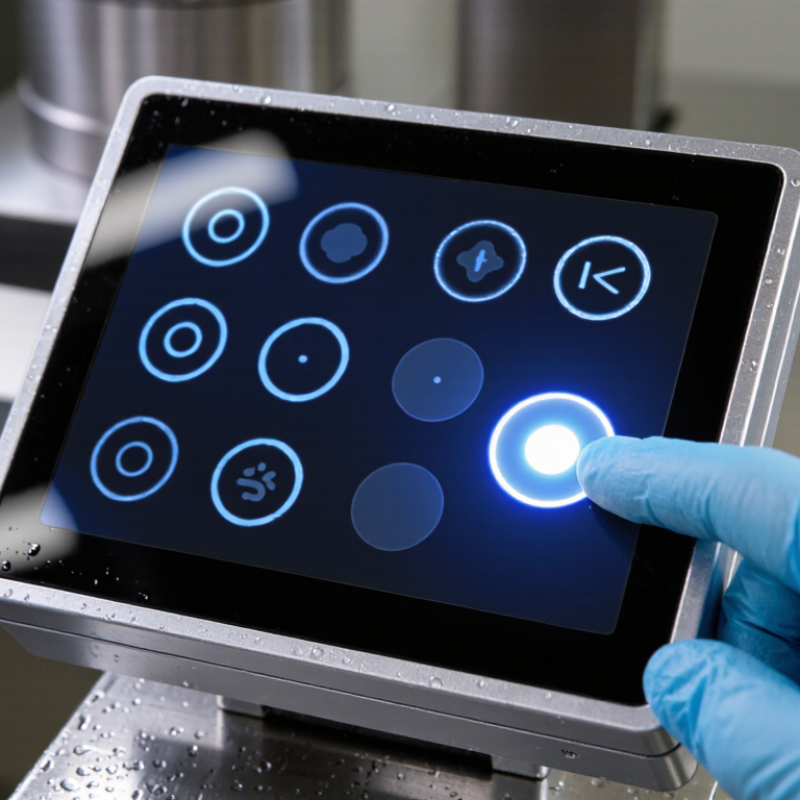
Capacitive switches detect changes in an electric field rather than physical movement. A finger changes the sensor’s capacitance when it approaches the electrode. The controller measures that change and triggers a command. No moving contact exists. This design supports slim panels, sealed surfaces, and quiet operation.
According to MarketsandMarkets’ 2023 Capacitive Sensors report, the market was valued at about USD 31.8 billion and may reach USD 48.0 billion by 2028. That growth reflects demand across consumer electronics, vehicles, appliances, medical devices, and industrial controls. A switch may sit behind glass, plastic, or coated panels. Backlighting can also show status clearly in dark equipment rooms. Small details matter.
Engineering evaluations commonly test moisture, gloves, electromagnetic noise, temperature, and accidental touches. Poor grounding can cause unstable sensitivity. Thick overlays may reduce detection distance. These limitations deserve attention before supplier comparison. In medical or industrial settings, designers often add visual feedback and a deliberate activation threshold. Capacitive switches are durable, but not automatically reliable. The market figures are useful directionally, yet they combine different sensor types and application categories. That makes direct switch demand harder to measure precisely.
10 Best Capacitive Switch Suppliers for Global Buyers? - Capacitive Switches: Definition, Operating Principles, and Key Applications
| Rank | Supplier Profile | Typical Product Focus | Operating Principle | Typical Supply Voltage | Typical Operating Temperature | Common Protection Level | Key Applications | Recommended Buyer Evaluation Criteria |
|---|---|---|---|---|---|---|---|---|
| 1 | Industrial Control Supplier | Panel-mounted capacitive push buttons, machine-interface switches, and metal-faceplate controls | Change in capacitance caused by finger proximity or touch | 5–24 V DC | −20°C to +70°C | IP65–IP69K options | Factory automation, control cabinets, packaging equipment, and process machinery | Glove sensitivity, false-trigger resistance, panel thickness, EMC performance, and cleaning requirements |
| 2 | Medical Interface Supplier | Sealed touch controls, membrane-integrated capacitive panels, and low-force user interfaces | Electrode sensing with electronic threshold detection | 3.3–12 V DC | 0°C to +50°C | IP54–IP67 options | Patient monitors, laboratory instruments, diagnostic equipment, and therapy devices | Disinfection compatibility, tactile feedback, leakage-current design, traceability, and compliance documentation |
| 3 | Automotive HMI Supplier | Backlit capacitive controls, steering-wheel touch interfaces, and center-console switches | Touch-induced capacitance variation interpreted by a controller | 5–16 V DC | −40°C to +85°C | Automotive environmental sealing | Vehicle infotainment, climate controls, interior lighting, and driver-information systems | Temperature cycling, vibration, moisture resistance, optical uniformity, and automotive EMC testing |
| 4 | Consumer Electronics Supplier | Compact touch keys, capacitive sliders, touch wheels, and illuminated control panels | Self-capacitance or mutual-capacitance sensing | 1.8–5 V DC | 0°C to +60°C | Front-surface splash resistance | Home appliances, audio equipment, personal electronics, and smart-home controls | Low power consumption, response time, aesthetic finish, tooling cost, and high-volume consistency |
| 5 | Commercial Appliance Supplier | Glass-panel touch switches, appliance control overlays, and capacitive selection keys | Finger-contact detection through a nonconductive overlay | 5–12 V DC | 0°C to +70°C | IPX4–IPX6 front-panel options | Cooking equipment, beverage machines, laundry equipment, and commercial kitchen systems | Heat resistance, grease and detergent compatibility, wet-finger operation, and graphic durability |
| 6 | Outdoor Equipment Supplier | Weather-resistant capacitive buttons, access controls, and vandal-resistant touch panels | Capacitance shift detected through a sealed front surface | 9–24 V DC | −30°C to +70°C | IP65–IP69K options | Parking terminals, kiosks, access gates, charging stations, and outdoor payment equipment | UV resistance, condensation tolerance, vandal resistance, temperature range, and long-term switch-life testing |
| 7 | Marine and Transport Supplier | Sealed touch panels, bridge controls, cabin interfaces, and transport equipment switches | Electronic detection of touch through coated glass, plastic, or laminate | 9–32 V DC | −25°C to +70°C | IP65–IP67 options | Marine consoles, rail interiors, fleet equipment, navigation interfaces, and passenger systems | Salt-fog resistance, vibration endurance, ingress protection, emergency-use feedback, and serviceability |
| 8 | Security and Access-Control Supplier | Capacitive entry keys, touch-to-exit controls, and illuminated access panels | Touch detection combined with controller-based debounce and filtering | 5–24 V DC | −20°C to +60°C | IP54–IP67 options | Door entry systems, elevator panels, security gates, intercoms, and building automation | Tamper resistance, standby power, backlight visibility, electromagnetic immunity, and auditability |
| 9 | Lighting and Building-Automation Supplier | Wall touch switches, dimming controls, scene selectors, and occupancy-related interfaces | Capacitive touch sensing with digital or analog control output | 5–24 V DC; mains interface via approved electronics | 0°C to +50°C | IP20–IP44 typical; higher options available | Residential lighting, hotel rooms, offices, conference spaces, and smart-building systems | Electrical safety, compatibility with wall materials, dimming protocol, standby consumption, and installation method |
| 10 | Custom OEM/ODM Interface Supplier | Application-specific capacitive switches, printed electrodes, custom overlays, and integrated assemblies | Self-capacitance, mutual-capacitance, or proximity sensing selected for the design | 1.8–24 V DC | Project-specific; commonly −20°C to +70°C | Project-specific IP rating | Specialized instruments, industrial equipment, branded control panels, and low-to-high volume products | Engineering support, prototype capability, tooling ownership, validation testing, minimum order quantity, and supply continuity |
Note: Values shown are typical design ranges or commonly specified options, not guaranteed specifications. Final performance depends on electrode geometry, overlay material and thickness, controller design, grounding, environmental conditions, and required certification.