What Is the Best Type of Small Manufacturing Machine?

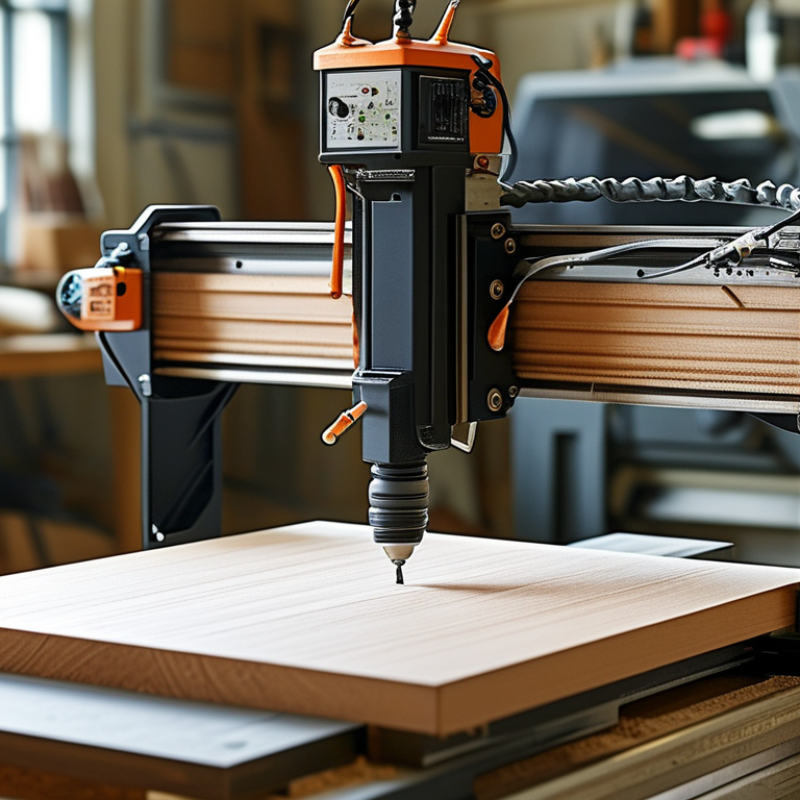
Choosing the best small manufacturing machine is rarely a simple matter of price or size. The right choice depends on your product, materials, production volume, workspace, and technical skills. A compact CNC router may suit wooden panels, while a benchtop laser cutter may handle detailed acrylic parts more efficiently. Small manufacturing machines can create excellent results, but only when their capabilities match the work.

A careful evaluation should begin with the machine’s working area, accuracy, speed, power requirements, and maintenance needs. Imagine a workshop with limited floor space, a standard electrical outlet, and one operator managing several tasks. In that setting, a quieter, easier-to-maintain machine may deliver more value than a faster model. Check manufacturer specifications, safety documentation, warranty terms, and parts availability before purchasing. Supplier training also matters. It can reduce costly mistakes during setup.

Performance tells only part of the story. The cheapest machine may become expensive when replacement parts arrive slowly or software support disappears. That concern deserves attention. Likewise, the most advanced model may overwhelm a small team with complex controls and unnecessary features. A sensible decision compares total ownership costs, expected output, product consistency, and future expansion. Independent reviews, test samples, and advice from experienced operators can strengthen the decision.

There is no universal winner. The best machine is the one that performs reliably within your real limits. This guide examines common machine types, practical applications, and the tradeoffs that buyers often overlook. Expect useful answers, but not perfect certainty. Manufacturing conditions change, and your priorities may change with them.
What Is the Best Type of Small Manufacturing Machine?

Types of Small Manufacturing Machines and Their Core Functions

Small manufacturing machines vary by material, output, and available floor space.

A compact CNC mill removes material from metal or plastic with controlled cutting tools. It suits brackets, prototypes, and repeat parts requiring accurate dimensions.

A desktop 3D printer builds plastic components layer by layer. It reduces waste and handles quick design changes, though surface finish may need improvement.

A small laser cutter uses focused heat to cut or mark suitable sheets. It works well for panels, labels, and lightweight enclosures.

For assembly work, pneumatic presses apply steady force to fit bushings, fasteners, or formed parts. Small injection molding machines melt plastic pellets and push them into molds. They support repeated production, but mold preparation can be expensive and time-consuming.

Benchtop lathes shape round stock by rotating the workpiece against a cutting tool. They are useful for shafts and spacers.

I have found that machine capacity matters more than impressive specifications. A machine that struggles under daily loads quickly becomes a costly interruption.

Tips: Measure the largest part before choosing a machine. Check power requirements, ventilation, tooling, noise, and operator training. Test one sample using the exact material. Record cycle time and dimensional variation. Do not trust a showroom demonstration alone.

Maintenance is often overlooked. Keep spare cutters, nozzles, seals, or belts within reach. Safety guards and emergency stops should be inspected before each shift. My own early estimates were sometimes too optimistic, especially around setup time. That mistake changed how I compare machines now. Small details decide whether production feels controlled or frustrating.

Key Factors for Comparing Small Manufacturing Machines

Choosing the best small manufacturing machine starts with the product, not the machine name. A desktop CNC suits rigid parts requiring accurate holes, slots, and flat surfaces. A 3D printer handles complex shapes with less cutting waste. A compact laser cutter works well for thin sheets, panels, and repeated markings. Small molding equipment can support higher quantities, but tooling costs may change the decision.

Compare the working area with your largest planned part. Check dimensional tolerance, spindle or nozzle stability, cycle time, and material compatibility. A machine may claim fine accuracy, yet heat, vibration, or poor calibration can reduce real results. Ask for test samples using your material. Measure them with calipers instead of trusting a brochure. Small details matter.

Purchase price is only one factor. Include software, tooling, dust collection, ventilation, electricity, maintenance, and operator training. A cheaper machine may require frequent adjustments. That can quietly consume production hours. Review emergency stops, guarding, electrical documentation, and local workplace requirements. Reliable technical support also matters when a sensor fails on a busy afternoon.

Start with a small production trial. Record setup time, rejected pieces, noise, cleaning needs, and actual output per hour. I would not choose the fastest machine automatically. Speed can create waste when operators struggle with controls or material handling. My own comparison would remain imperfect, because supplier demonstrations rarely reproduce a crowded workshop, changing materials, or an inexperienced operator.

How to Match a Machine Type to Your Production Needs

What Is the Best Type of Small Manufacturing Machine?

How to Match a Machine Type to Your Production Needs

The best small manufacturing machine depends on your product, materials, order volume, and required accuracy. A CNC machine suits hard materials and repeatable parts with tight tolerances. A laser cutter works well for sheet materials, signs, panels, and quick design changes. For plastic prototypes, a 3D printer reduces tooling costs and shortens development time.

Start with the production target, not the machine’s appearance. A shop making ten custom parts weekly may value flexible setup more than high speed. A business producing hundreds of identical pieces needs reliable cycle times and simple changeovers. Measure the part size carefully. Check the machine’s working area, spindle or laser capacity, and material limits before purchasing.

Small details matter. During a test run, watch how chips collect, how hot the material becomes, and how easily operators load each piece. Leave space for tools, ventilation, storage, and safe movement. Maintenance access is important too. A machine that stops production for a minor adjustment can become expensive.

I have seen buyers choose machines by advertised speed alone. That decision often creates unnecessary waste. A slower machine may deliver better results with fewer rejects. Be honest about your skills and labor availability. Automation sounds attractive, but complex controls can increase training time. Run sample parts, calculate total operating costs, and ask whether the machine still fits your needs six months later. Your first choice may be imperfect. That is normal.

What Is the Best Type of Small Manufacturing Machine?

Match the machine to your expected batch size. The chart shows typical economical batch-size ranges for common small manufacturing technologies. Actual results vary with part size, material, tooling, cycle time, and operator workload.

For one-off parts and prototypes, 3D printing or CNC machining is usually the better fit. Laser cutting suits repeatable flat components and medium batches, while injection molding becomes more cost-effective for high-volume production after tooling is available.

Equipment Costs, Workspace Requirements, and Operating Skills

The best small manufacturing machine depends less on its label than on your budget, floor plan, and operator skill. A benchtop CNC mill suits precise metal parts, while a compact CNC router handles wood, plastics, and softer materials. Expect roughly $3,000–$15,000 for a basic setup, excluding tooling, software, extraction, and installation. A 120-square-foot room may fit the machine, workbench, stock racks, and a clear safety path. Measure doors first. It sounds obvious, but many projects fail there.

Operating skill changes the real cost. The U.S. Bureau of Labor Statistics reported a median annual wage of $61,420 for industrial machinery mechanics in May 2023. It also projects 15% employment growth from 2023 to 2033. That signals a practical issue: maintenance knowledge is not optional. Operators must understand feeds, speeds, calibration, dust or chip control, and emergency procedures. Deloitte’s 2024 Smart Manufacturing and Operations Survey found that 86% of manufacturers view smart manufacturing as a key competitiveness driver. Still, digital controls cannot repair poor setup.

Tips: Compare total ownership cost, not purchase price. Add tooling, ventilation, electricity, training, maintenance, and rejected parts. The U.S. Department of Energy notes that compressed-air systems can consume significant industrial electricity, especially when leaks remain unnoticed. For a small workshop, a simpler machine may be wiser. I would choose slower, serviceable equipment over impressive automation when daily production is uncertain. My first estimate would still include a 20% contingency. Reality is usually less tidy.

What Is the Best Type of Small Manufacturing Machine? - Equipment Costs, Workspace Requirements, and Operating Skills

Machine Type Typical Applications Typical Equipment Cost (USD) Recommended Workspace Power Requirement Operating Skills Best Fit for a Small Business
Desktop CNC Router Wood, plastic, foam, signs, panels, and light non-ferrous metal work $2,000–$15,000 40–100 sq. ft.; include material storage and dust collection 120 V or 240 V; usually 1–3 kW Basic CAD/CAM, tool setup, workholding, and measurement Custom products, prototypes, signs, and short production runs
Benchtop CNC Mill Small metal parts, brackets, fixtures, and precision prototypes $5,000–$30,000 50–120 sq. ft.; requires a rigid bench and chip-control area 120 V or 240 V; commonly 1–5 kW Intermediate machining, feeds and speeds, inspection, and maintenance Precision parts without the cost of a full-size machining center
Desktop Laser Cutter Engraving and cutting wood, acrylic, leather, paper, and selected textiles $3,000–$20,000 30–80 sq. ft.; requires ventilation, clearance, and fire protection 120 V; typically 0.5–2.5 kW Vector design, material testing, ventilation checks, and fire-safety procedures Personalized goods, packaging, displays, and low-volume production
FDM 3D Printer Functional prototypes, jigs, fixtures, enclosures, and educational products $500–$8,000 15–50 sq. ft. per unit; allow space for filament and finished parts 120 V; approximately 0.2–1.0 kW Basic 3D modeling, slicing, calibration, and material handling Low-cost prototyping and customized parts with minimal floor space
Desktop Resin 3D Printer Detailed models, dental or jewelry patterns, miniatures, and visual prototypes $300–$6,000 20–60 sq. ft.; provide ventilation and a separate washing/curing area 120 V; approximately 0.1–0.5 kW Slicing, resin safety, support design, washing, curing, and waste handling Highly detailed parts where surface quality is more important than size
Small CNC Lathe Bushings, shafts, threaded parts, knobs, and cylindrical components $8,000–$40,000 60–150 sq. ft.; allow room for loading, chips, coolant, and inspection 240 V is common; approximately 3–10 kW Intermediate-to-advanced turning, tooling, workholding, and quality control Repeatable cylindrical parts and small-batch metal production
Small Hydraulic Press Brake Bending sheet metal for brackets, cabinets, enclosures, and frames $15,000–$60,000 100–250 sq. ft.; requires clear front and side access for sheet handling 240 V or 480 V; approximately 5–20 kW Material calculation, tooling selection, bend allowance, and machine safety Sheet-metal fabrication with repeatable bends and moderate production volume
Small Injection Molding Machine Repeated plastic components, housings, caps, and small technical parts $20,000–$100,000+ 150–400 sq. ft.; include mold storage, material drying, and part handling 240 V or 480 V; approximately 10–40 kW Advanced process setup, mold handling, temperature control, and quality inspection Higher-volume plastic production after tooling costs are justified

Cost ranges are typical planning estimates in U.S. dollars for new small-scale equipment and may exclude tooling, shipping, installation, software, dust collection, ventilation, electrical upgrades, and safety equipment. Workspace figures include operating clearance but not complete inventory or office space.

Safety, Maintenance, and Future Expansion Considerations

The best small manufacturing machine is safe to operate, easy to inspect, and ready for controlled expansion. Small is not harmless. OSHA’s Top 10 enforcement data repeatedly places machine guarding among major workplace safety concerns. Choose enclosed cutting zones, accessible emergency stops, clear sightlines, and controls that prevent accidental restarting. A narrow machine footprint also needs safe material flow. Leave room for loading, cleaning, and a worker’s hands, not only the machine body.

Maintenance determines whether a low-cost machine stays economical. The U.S. Department of Energy reports that motor-driven systems consume about 70% of industrial electricity in the United States. Efficient motors, correct alignment, lubrication access, and visible wear indicators can reduce waste.

Keep a simple log for vibration, temperature, belt tension, and unusual noise. Five minutes matters.

However, preventive schedules are not perfect. Dust, misuse, and rushed changeovers still create failures. A paper checklist may outperform expensive software when workers actually use it.

Future expansion requires practical flexibility. Deloitte’s 2024 Smart Manufacturing and Operations Survey found that 92% of manufacturers view smart manufacturing as important to competitiveness. That does not mean every small machine needs advanced connectivity. Select modular tooling, spare electrical capacity, standard interfaces, and software that can export usable data. Reserve floor space beside the machine. A cheap purchase can become an expensive obstacle when production doubles. I would avoid over-automation at the beginning; reliable manual inspection can reveal problems that sensors miss.