
Top Pad Manufacturing Machine Manufacturers and Suppliers
When buyers compare top pad manufacturing machine manufacturers and suppliers, the most useful starting point is the product itself. Pad dimensions, absorbency targets, material layers, and expected output all influence machine design. A line for thin daily-use pads may differ greatly from one built for thicker or specialty products. Small details matter. Web width, sealing temperature, cutting accuracy, and changeover time can affect consistency on a real factory floor. These specifications deserve a practical review, not just a brochure comparison.
A reliable supplier should explain machine limits clearly and support claims with drawings, sample runs, and measurable production data. Ask how operators access common wear parts, adjust settings, and clean product-contact areas between runs. Also confirm installation needs, training scope, spare-part lead times, and the service team’s response process. A polished demonstration is useful, but it cannot answer every question. Production conditions vary. Material quality, operator experience, and maintenance habits may change actual output. This guide examines manufacturers and suppliers through those practical factors, while recognizing that published figures may not match every plant. The comparison is not a substitute for a factory trial or technical review. Still, it can help buyers frame better questions before investing in a pad manufacturing machine.
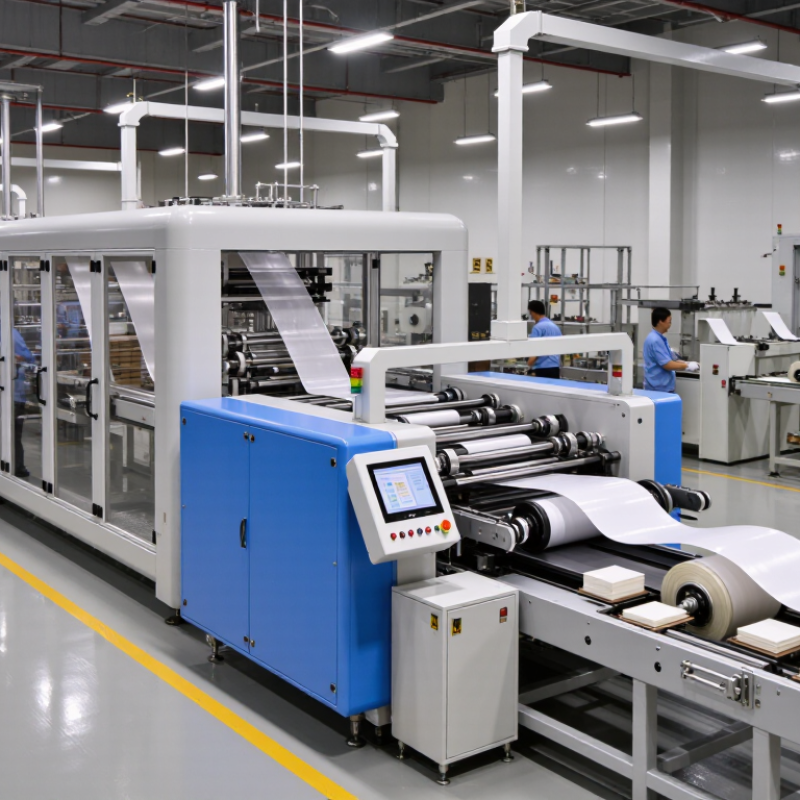
What Is a Pad Manufacturing Machine?
A pad manufacturing machine is a production line that turns selected materials into finished pads of a defined size and shape. Depending on the product, it may handle fabric, foam, paper, absorbent layers, or other flexible materials. Typical stages include feeding rolls from an unwinder, aligning and layering materials, bonding or stitching them, cutting individual pads, and checking dimensions. Some lines also add compression or automated packing. The exact setup depends on pad design, material thickness, and required output. Not every machine performs every step.
Tips: Ask which materials and pad sizes the machine can process. Check changeover time, cutting accuracy, and cleaning access. A sample run can reveal wrinkles or uneven edges before full production begins.
When comparing equipment, look beyond its rated speed. A line running quickly may still waste material if web tension or alignment is inconsistent. Inspect finished samples for clean edges, secure bonds, and even thickness. Ask how operators adjust settings and respond to stoppages; these details affect daily use. One overlooked issue is material variation between batches. Even a well-set machine may need small adjustments, so production records and routine checks matter.
| Pad Product | Typical Machine System | Main Manufacturing Stages | Indicative Line Output | Common Feed Materials | Typical In-Line Checks |
|---|---|---|---|---|---|
| Sanitary napkins | Automatic converting and packaging line | Core forming, absorbent material placement, topsheet and backsheet lamination, wing folding, cutting, individual wrapping, and packing | Approximately 200–800 pieces per minute, depending on product design and line configuration | Fluff pulp, superabsorbent polymer where specified, nonwoven topsheet, breathable film or backsheet, release paper, and packaging film | Product dimensions, component placement, seal integrity, missing-product detection, and pack count |
| Panty liners | High-speed liner converting line, often with roll-fed material handling | Layer feeding, absorbent-layer placement, bonding, contour cutting, folding, individual wrapping, and cartoning | Approximately 300–1,000 pieces per minute for suitable product and equipment configurations | Nonwoven or perforated film, absorbent tissue or pulp, polyethylene or breathable backsheet, and release paper | Cut shape, material registration, adhesive or bond consistency, and wrapper presence |
| Adult incontinence pads | Absorbent pad converting line with core-forming and sealing modules | Core preparation, absorbent-core placement, topsheet and backsheet joining, shaping, edge sealing, folding, and packing | Approximately 100–400 pieces per minute; absorbency, size, and construction affect speed | Fluff pulp, superabsorbent polymer where required, nonwoven topsheet, film backsheet, and hot-melt adhesive | Core position, product dimensions, seal quality, material presence, and finished-pack quantity |
| Disposable underpads | Sheet-forming, lamination, cutting, and stacking line | Web unwinding, absorbent-layer placement, layer bonding, cross-cutting, stacking, and bundle packaging | Approximately 20–120 sheets per minute, depending on sheet size and number of layers | Nonwoven fabric, absorbent pulp or tissue, waterproof film, and adhesive or other bonding materials | Sheet length and width, layer alignment, bonding, stack count, and package seal |
| Reusable cloth pads | Cutting, sewing, and finishing equipment; production is often less automated | Fabric spreading, die or digital cutting, layer assembly, sewing or ultrasonic joining, edge finishing, and inspection | Varies widely with operator count, sewing method, and product complexity; output is generally specified per production cell | Cotton or other textile fabrics, absorbent inner layers, waterproof or water-resistant backing, and thread | Stitch quality, dimensions, layer alignment, fastening placement, and visual defects |
| What is a pad manufacturing machine? It is equipment that converts raw materials into finished absorbent or protective pads through operations such as material feeding, forming, bonding, cutting, folding, inspection, and packaging. Output figures above are indicative ranges, not guaranteed specifications; actual capacity depends on product dimensions, material properties, line layout, and operating conditions. | |||||
Related Posts
-
China Top Automatic Sanitary Napkin Machine Supplier?
-
How to Choose the Best Sanitary Napkin Machines for Your Business
-
Why Choose a Pad Manufacturing Machine for Your Business?
-
How to Choose a China Top Automatic Sanitary Napkin Machine?
-

2026 Best Sanitary Pad Manufacturing Machine Options for Your Business?
-
2026 Best Sanitary Napkin Machines for Global Buyers?