
Why Choose a Pad Manufacturing Machine for Your Business?
Choosing the right pad manufacturing machine can shape your production quality, costs, and future growth. For businesses making absorbent hygiene pads, equipment affects every stage, from material feeding to sealing and packaging. A reliable machine should handle core materials consistently, maintain accurate dimensions, and reduce avoidable production waste.
Look closely at practical performance. Can the machine run stable speeds during long shifts? Does it support quick size adjustments? Are sensors easy to inspect beside the control panel? These details matter on a real factory floor. Operators also need clear controls, accessible maintenance points, and dependable safety features. Strong manufacturers provide technical documentation, training, spare-parts guidance, and responsive service. That support reflects genuine industry experience, not just attractive specifications.
A pad manufacturing machine may also improve output consistency and labor efficiency. Automated cutting, shaping, and packaging can reduce repetitive manual work. Better control may help businesses meet internal quality standards and customer expectations. Yet automation is not a magic answer. A faster line can still create waste if materials are poorly selected or settings are ignored. No machine is perfect. Businesses should compare production capacity, energy use, maintenance requirements, product compatibility, and total ownership cost. Small trials and supplier references can reveal problems that brochures miss. With careful evaluation, the right equipment becomes more than a purchase. It becomes a practical foundation for safer operations, controlled growth, and reliable product quality.
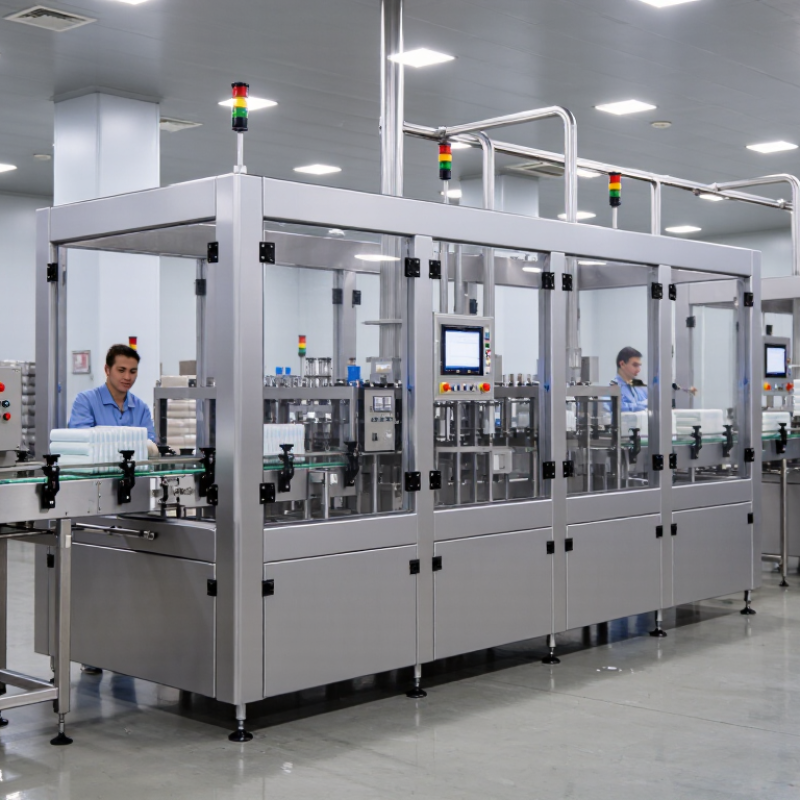
What Is a Pad Manufacturing Machine?
A pad manufacturing machine is an integrated production system that converts raw materials into finished menstrual pads. It usually unwinds nonwoven fabric, forms an absorbent core, adds superabsorbent polymer, applies adhesive, seals the layers, cuts each pad, and folds it for packing. Some lines also include wing forming and individual wrapping units.
The need is substantial. The WHO and UNICEF Joint Monitoring Programme reported in 2024 that about 1.8 billion women and girls menstruate worldwide. Around 500 million lack adequate menstrual hygiene products or facilities. This figure explains why manufacturers examine automation, output stability, and local supply capacity.
A reliable machine should control core weight, pad dimensions, sealing strength, and absorbency. Operators commonly inspect samples during production, not only after packaging. Sensors can detect missing materials, but they do not replace trained judgment. Small alignment errors may create uncomfortable edges or leakage risks. That part is easy to underestimate.
Production speed is only one measure. A practical evaluation should include material waste, changeover time, cleaning access, energy use, and maintenance records. Technical data sheets can look impressive. Real factory trials are more revealing. According to ISO 15621, absorbent hygiene products should be assessed through consistent performance testing, although laboratory results may not fully reflect user experience. A machine therefore supports quality; it does not guarantee it.
Why Choose a Pad Manufacturing Machine for Your Business? - What Is a Pad Manufacturing Machine?
| Business and Machine Dimension | Typical Data or Specification | Business Value |
|---|---|---|
| Definition | An integrated production system that forms, assembles, seals, cuts, folds, and packages absorbent hygiene pads. | Combines several production stages into one coordinated workflow. |
| Common Product Applications | Menstrual pads, panty liners, maternity pads, and selected light-to-moderate incontinence pads. | Allows a business to serve several absorbent-hygiene market segments. |
| Production Speed | Typical commercial lines may operate from approximately 300 to more than 1,000 pieces per minute, depending on product design, size, and automation level. | Supports higher production volume than manual or highly labor-intensive assembly. |
| Core Materials | Fluff pulp, superabsorbent polymer, or a combination of both, selected according to the required absorbency and product structure. | Enables different absorbency levels and product specifications. |
| Typical Product Layers | Permeable topsheet, absorbent core, leak-resistant backsheet, release paper, adhesive system, and optional wings or individual wrapping. | Provides controlled fluid acquisition, retention, comfort, and leakage protection. |
| Product Size Flexibility | Many lines can be configured for multiple lengths, widths, absorbency levels, wing styles, and packaging formats by changing tooling or settings. | Makes it easier to create a wider product portfolio. |
| Automation Level | Options generally range from semi-automatic systems requiring more operator handling to fully automated lines with automatic feeding, sealing, counting, and packing. | Allows investment levels to match production targets, labor availability, and budget. |
| Quality-Control Functions | Typical controls include web alignment, length and width checks, seal inspection, material-break detection, missing-component detection, and production counting. | Improves consistency and helps reduce defective or incomplete products. |
| Packaging Formats | Individual wrapping, multi-piece packs, pillow packs, and carton-ready bundles are common options. | Supports different retail, institutional, and distribution requirements. |
| Utility Requirements | Industrial electrical power is normally required; pneumatic components commonly require clean, dry compressed air. Exact consumption depends on line speed and configuration. | Helps determine factory infrastructure, installation planning, and operating costs. |
| Space and Layout | A complete line may require several meters of production space, plus room for raw-material storage, operator access, maintenance, inspection, and finished-goods handling. | Supports safer material flow and easier maintenance access. |
| Labor Requirement | Labor needs vary by automation level, but operators are generally required for material loading, process monitoring, quality checks, changeovers, and packing supervision. | Reduces repetitive manual assembly while retaining human oversight. |
| Material Utilization | Servo-controlled feeding, synchronized cutting, and accurate web positioning can help minimize trim waste compared with less controlled manual processes. | May improve material yield and production cost control. |
| Changeover Capability | Changeover time depends on tooling, product size, packaging format, stored recipes, and operator experience. | Faster changeovers improve flexibility for multiple products and shorter production runs. |
| Best-Fit Business Situation | Businesses with repeatable demand, access to qualified operators, adequate factory utilities, and a need for consistent medium- or high-volume production. | Provides a scalable foundation for capacity expansion and standardized manufacturing. |
Note: Production speeds, utility requirements, dimensions, and labor needs are indicative industry ranges. Actual values depend on product design, machine configuration, raw materials, quality standards, and operating conditions.
Related Posts
-
How to Choose Sanitary Napkin Machines for Your Business?
-
Top 10 Adult Diaper Machine Innovations You Should Know?
-
Top 10 Diaper Manufacturing Equipment You Need for a Successful Factory
-
How to Choose the Best Sanitary Napkin Machines for Your Business
-

2026 Best Sanitary Pad Manufacturing Machine Options for Your Business?
-
Top China Best All Manufacturing Machines for Your Needs?