10 Tips for Choosing the Right Machinery Machine
Choosing the right machinery machine can determine production speed, product quality, operating cost, and workplace safety. The decision reaches far beyond purchase price. A machine that looks efficient in a showroom may consume excessive energy, require rare spare parts, or exceed your operators’ skills. Small details matter, including control-panel visibility, vibration, noise, cleaning access, and maintenance space.
Deloitte’s 2024 Global Smart Manufacturing Survey reported that 86% of manufacturers viewed smart manufacturing as important to competitiveness within three years. That finding changes the buying question. Businesses must examine sensors, software compatibility, data ownership, cybersecurity, and upgrade options, not only cutting capacity. The International Energy Agency also continues to identify industrial efficiency as a major opportunity for reducing energy demand. A lower-energy machinery machine may therefore protect margins while supporting environmental targets. Yet efficiency claims deserve evidence. Ask for test conditions, duty-cycle data, warranty terms, and references from comparable factories.
Shigeo Shingo, a respected industrial engineer, warned, “The most dangerous kind of waste is the waste we do not recognize.” His observation fits machinery selection closely. Hidden waste can appear as long setup times, unnecessary motion, rejected batches, or delayed repairs. The ten tips ahead provide a practical framework for comparing capability, total ownership cost, safety, service support, and future flexibility. No checklist removes uncertainty. I may even overvalue automation when a simpler machine would perform better. That is why plant trials, operator feedback, and documented calculations should guide the final choice. Reliability begins with questions asked before the purchase order.
Define the Machinery Requirements and Intended Application
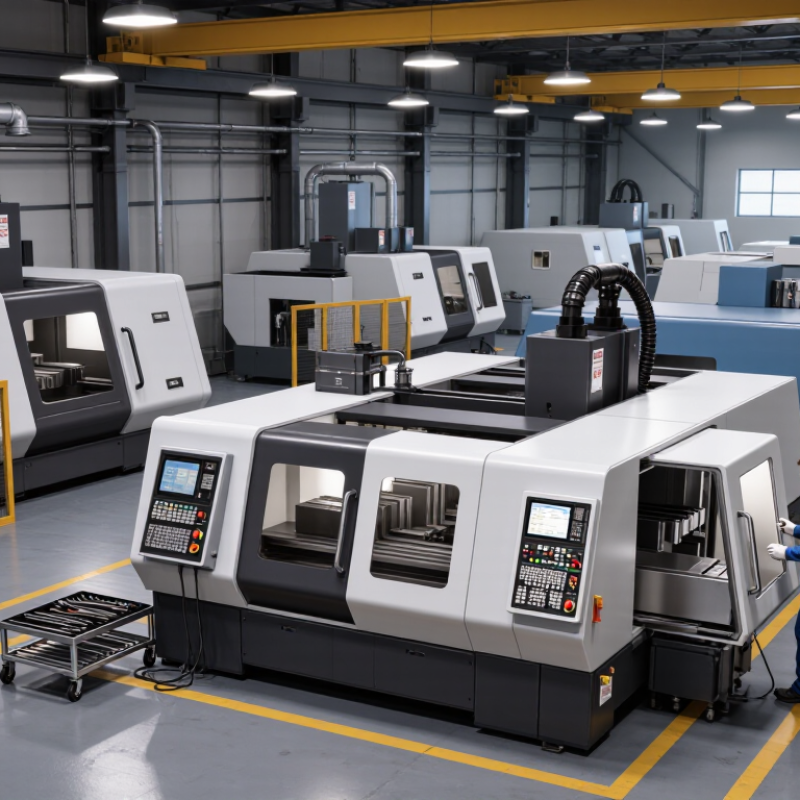
Defining machinery requirements begins with the work, not the equipment catalogue. Describe the intended application in measurable terms. Record the material, dimensions, weight, production volume, and operating frequency. A machine handling wet clay needs different protection from one processing dry metal parts. Include the workspace temperature, dust level, available power, and floor capacity. These details often expose unsuitable options early.
Set realistic performance targets. Specify hourly output, acceptable tolerances, cycle times, and maximum load. Leave operating capacity for variation, but avoid paying for unused capability. In my experience, a small output increase can demand larger motors, stronger frames, and more complex maintenance. That trade-off is easy to underestimate. It deserves calculation.
Ask who will operate the machine and how often adjustments occur. A clear control layout can prevent mistakes during a busy shift. Check access to wear parts, inspection points, and emergency controls. Request technical drawings, service intervals, noise data, and documented safety compliance from qualified suppliers. I once focused too heavily on speed and overlooked cleaning time. That decision reduced real productivity. Build a trial plan using representative materials before approval, and record results under normal working conditions. Need changes may appear after installation.
10 Tips for Choosing the Right Machinery Machine: Define the Machinery Requirements and Intended Application
Example requirement-priority profile for a medium-duty CNC milling application
Before comparing machinery, define the intended material, workload, dimensional accuracy, operating speed, safety needs, maintenance conditions, and available utilities. The priority scores below use a 1–5 scale, where 5 represents a critical requirement. Actual target values should be adjusted to the workpiece, production volume, and operating environment.
Assess Machine Capacity, Performance, and Technical Specifications
Choosing machinery by purchase price alone often creates expensive surprises. Start with capacity, but do not trust the maximum rating without context. Check hourly output, duty cycle, batch size, and material density. A unit rated for ten tons may produce far less during continuous operation. Temperature, dust, humidity, and limited floor space can also reduce practical capacity.
Performance should be measured under realistic working conditions. Compare cycle time, accuracy, repeatability, energy use, and recovery after heavy loads. Request a test using materials similar to those used at your site. Watch for vibration, unusual noise, heat buildup, and unstable output. A spreadsheet can still mislead. Real operating data matters more.
Technical specifications need careful reading. Confirm motor power, operating range, tolerances, dimensions, control interfaces, and maintenance access. Review electrical requirements and the availability of replacement parts. Ask for calibration records, inspection reports, and documented safety protections. In field evaluations, small details often decide reliability, such as a filter that takes ten minutes to clean or a panel that cannot be reached safely. Independent technical review is valuable, although it may slow the buying process. That delay is usually cheaper than correcting a poor fit. Some decisions will remain uncertain; record the assumptions and test them before approval.
Compare Safety Features, Energy Use, and Operating Costs
Choosing the right machinery requires more than comparing purchase prices. Start by checking guarding, emergency stops, interlocks, noise levels, and operator access. ISO 12100 recommends risk assessment throughout a machine’s life cycle. Ask for test records, maintenance access, and clear training instructions. Tip one: inspect moving parts. Tip two: verify the emergency stop. Tip three: examine the control panel. Tip four: confirm spare-part availability. Small details matter.
Energy use deserves equal attention. The International Energy Agency reports that industrial motor systems consume roughly 70% of industrial electricity. Request rated power, expected load, standby consumption, and efficiency data. Tip five: compare variable-speed control. Tip six: measure idle demand. Tip seven: check compressed-air losses. The U.S. Department of Energy notes that compressed-air leaks can waste 20% to 30% of system output. A quiet leak near a fitting can become an expensive monthly habit.
Calculate operating costs over five years, not five minutes. Include electricity, lubrication, filters, inspections, downtime, and disposal. Tip eight: estimate annual energy cost. Tip nine: price routine service. Tip ten: test the supplier’s cost assumptions. I would challenge optimistic figures. Real factories rarely run at perfect loads. A machine may look efficient on paper, yet consume more during frequent starts, jams, or partial production. Compare measured performance when possible. Use independent test reports, documented warranties, and maintenance logs before approving the purchase.
Evaluate Maintenance Needs, Reliability, and Supplier Support
10 Tips for Choosing the Right Machinery Machine
Maintenance needs should be measured before purchase, not guessed from a sales brochure. Tip 1: Map daily loads, temperatures, dust, and operator access. Tip 2: Check service intervals and required skills. Tip 3: Price filters, belts, lubricants, sensors, and downtime. The U.S. Department of Energy reports that predictive maintenance can reduce maintenance costs by 25–30% and breakdowns by 70–75%. Those figures are useful benchmarks, not promises. Tip 4: Ask whether vibration, heat, or oil data can be monitored. Tip 5: Confirm that alerts are clear enough for a busy maintenance team.
Reliability must appear in evidence. Tip 6: Request failure-rate data, test conditions, and expected service life. Tip 7: Inspect references from facilities with similar workloads. Tip 8: Review warranty exclusions carefully. ISO 14224 provides a recognized structure for collecting equipment reliability and maintenance data. It helps compare claims with operating history. I have seen impressive machines struggle because cleaning access was poor. That detail is easy to miss.
Supplier support can protect production after installation. Tip 9: Verify spare-parts availability, response times, training, and remote assistance. Tip 10: Put support commitments into the contract. The International Energy Agency links effective digital monitoring with better industrial energy and operational performance, but connectivity alone solves little. Ask who reviews the data. Ask what happens during a network failure. A perfect checklist is unrealistic. Revisit it after the first three months.
10 Tips for Choosing the Right Machinery Machine - Evaluate Maintenance Needs, Reliability, and Supplier Support
| No. | Selection Tip | What to Evaluate | Practical Benchmark or Data Point | Recommended Evidence | Risk if Overlooked |
|---|---|---|---|---|---|
| 1 | Define the Required Capacity | Confirm the required output, operating hours, material type, product dimensions, and expected peak demand before comparing machines. | Select a machine that can meet normal production demand with approximately 10%–20% practical capacity headroom, without routinely operating below its efficient load range. | Production forecasts, process-flow analysis, sample testing, and documented capacity calculations. | High: recurring bottlenecks or excessive idle capacity. |
| 2 | Check Total Cost of Ownership | Compare purchase price with installation, utilities, tooling, consumables, labor, planned maintenance, unplanned repairs, and disposal costs. | Use a five-year cost model and include energy, spare parts, service labor, training, and downtime assumptions. | Written quotations, utility specifications, maintenance estimates, warranty terms, and lifecycle cost calculations. | High: low initial price but high operating expense. |
| 3 | Evaluate Reliability History | Review failure frequency, mean time between failures, mean time to repair, operating conditions, and the maturity of the machine design. | Ask for field-performance data from comparable applications and assess whether reported downtime is measured consistently. | Anonymized service records, maintenance logs, reference-site interviews, and documented reliability testing. | High: production interruptions and missed delivery commitments. |
| 4 | Assess Preventive Maintenance Needs | Identify lubrication points, inspection intervals, calibration requirements, filter changes, belt or seal replacement, and required specialist skills. | Prefer clearly documented maintenance intervals and routine tasks that can be completed safely by trained in-house technicians where appropriate. | Maintenance schedules, service manuals, task-time estimates, access diagrams, and recommended-tool lists. | Medium: higher labor costs and avoidable equipment deterioration. |
| 5 | Verify Spare Parts Availability | Check the availability, lead time, shelf life, interchangeability, and cost of critical wear parts and failure-prone components. | Establish target delivery times for critical parts and define a minimum on-site stock for components that could stop production. | Parts lists, stocking recommendations, lead-time commitments, service-level terms, and obsolescence policies. | High: extended downtime while waiting for parts. |
| 6 | Measure Energy and Utility Demand | Review electrical load, compressed air, water, fuel, ventilation, heat removal, and operating conditions at both rated and typical loads. | Compare energy consumption per finished unit rather than only maximum power ratings. | Utility data sheets, measured acceptance-test results, efficiency curves, and facility-capacity assessments. | Medium: higher operating costs or costly facility upgrades. |
| 7 | Confirm Safety and Compliance | Assess guarding, emergency stops, interlocks, noise, heat, emissions, ergonomic access, electrical safety, and applicable local regulations. | Require a documented risk assessment and verify that safety functions are tested before commissioning and after major modifications. | Conformity documentation, risk assessments, safety test procedures, operator instructions, and training records. | High: injury exposure, regulatory action, or forced shutdown. |
| 8 | Test Quality and Process Capability | Determine whether the machine can consistently achieve required tolerances, repeatability, throughput, surface quality, and rejection limits. | Use representative materials and define measurable acceptance criteria before a factory or on-site performance test. | Trial-run results, capability studies, inspection records, sample outputs, and signed acceptance-test procedures. | High: scrap, rework, customer complaints, and unstable output. |
| 9 | Review Supplier Support | Evaluate installation support, commissioning, operator training, remote diagnostics, field service coverage, escalation procedures, and communication quality. | Define response-time targets, service availability, training scope, and responsibilities in the purchase agreement. | Service-level agreement, support escalation chart, training plan, service coverage map, and customer references. | Medium: slower recovery from technical problems. |
| 10 | Plan for Flexibility and Future Needs | Check changeover time, modular options, software updates, data connectivity, tooling compatibility, expansion capacity, and operator adaptability. | Estimate likely product or volume changes over the next three to five years and confirm the cost of future upgrades. | Upgrade roadmaps, interface specifications, changeover demonstrations, compatibility statements, and expansion quotations. | Low to Medium: premature replacement or expensive retrofits. |
Verify Compliance, Total Value, and Long-Term Suitability
10 Tips for Choosing the Right Machinery Machine
Verify Compliance, Total Value, and Long-Term Suitability
Choosing machinery is not only about capacity or purchase price. In equipment reviews, I have seen attractive machines fail because basic compliance documents were missing. Check applicable safety standards, electrical requirements, guarding, noise limits, and operator training needs. Request test records, inspection reports, manuals, and clear maintenance procedures. Confirm that the machine suits your site conditions, including floor strength, temperature, ventilation, and available power.
Then calculate total value over several years. Include installation, tooling, energy use, consumables, maintenance labor, spare parts, and expected downtime. A low-cost machine may become expensive after repeated repairs. Ask suppliers for realistic service intervals and typical replacement costs. Speak with current users when possible. Their comments about response times often reveal more than polished sales material. Keep written records of every promise.
Long-term suitability deserves equal attention. Check whether the controls are easy to learn, parts remain available, and software or components can be updated. Consider changes in production volume, staffing, and workspace. Leave room for safe access around the machine. It is easy to focus on today’s output and overlook next year’s needs. I have made that mistake before. A detailed scoring sheet can reduce bias, although it cannot replace a hands-on trial. Test the machine with your actual materials, cycle times, and operators before approval.
Related Posts
-
China Top 10 Machinery Machine Suppliers?
-
What Are the Best Machine Industry Suppliers in China?
-

How to Find Reliable Machine Industry Suppliers in 2026?
-

What Is Industrial Machinery and Equipment?
-
China Top 10 Manufacturing Machinery Equipment Manufacturers
-
China Top 10 Machinery and Equipment Manufacturers?