
What Is an Automatic Manufacturing Machine?
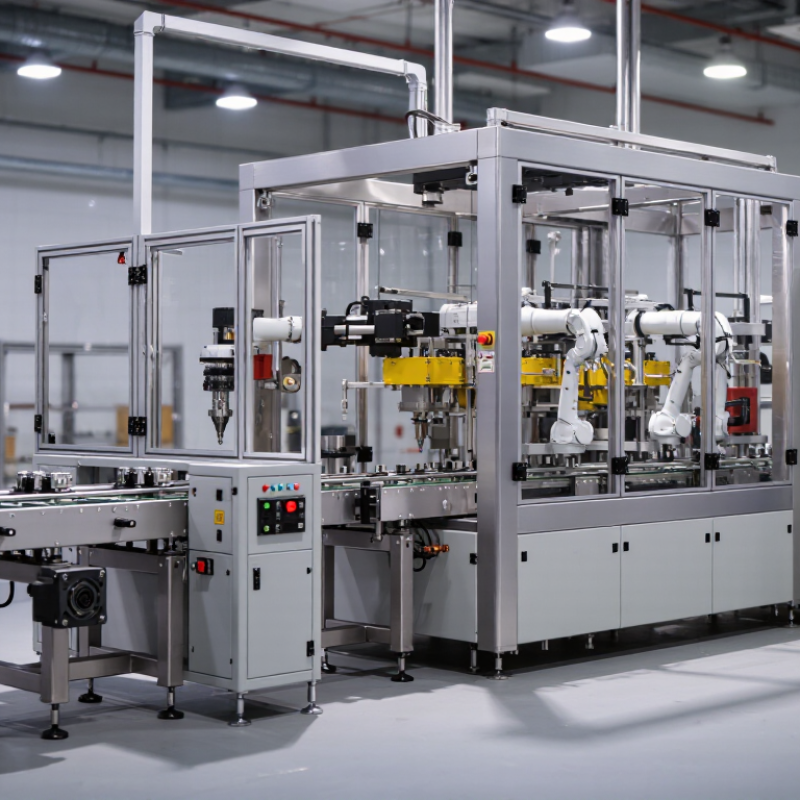
An automatic manufacturing machine is a system designed to perform production tasks with limited direct human control. It may feed materials, position components, operate tools, inspect products, and record process data. Its structure often includes sensors, programmable logic controllers, servo motors, robotic arms, and safety interlocks. Together, these parts create a controlled production cycle.
Mikell P. Groover, a respected author on automation and manufacturing systems, defines automation as “the technology by which a process or procedure is accomplished without human assistance.” This idea explains the purpose of an automatic manufacturing machine, but it does not describe every practical challenge. A machine can move quickly. It can also repeat the same mistake for an entire shift. That uncomfortable detail matters.
In a real factory, performance depends on more than speed. A technician checks sensor alignment, listens for unusual vibration, and examines rejected parts under bright inspection lights. Engineers also review changeover time, energy use, software settings, and maintenance records. A reliable automatic manufacturing machine should protect workers, produce consistent results, and allow problems to be traced clearly. It should not be treated as a magic solution. Poorly selected equipment may increase downtime, waste materials, or create difficult maintenance work. The following discussion examines how these machines operate, where they create value, and which limitations manufacturers should consider before investing.
Definition and Core Purpose of an Automatic Manufacturing Machine
An automatic manufacturing machine is equipment that performs production tasks with limited human intervention. It may feed materials, assemble parts, inspect surfaces, or package finished goods. Sensors detect position, pressure, temperature, and movement. A control system then adjusts the process according to programmed instructions.
Its core purpose is to create stable, repeatable output while reducing unnecessary manual effort. In a well-designed production line, the machine can maintain timing within tight limits and record important process data. This helps technicians identify defects, reduce material waste, and improve workplace safety. For example, a machine may place each component at the same angle and apply a measured amount of force. The result is more consistent than work based only on human judgment.
Automation is not magic. A dirty sensor can stop an otherwise capable system. Poor calibration may produce repeated defects at impressive speed. Regular inspection, planned maintenance, and operator training remain essential. The best systems also allow safe manual checks and clear fault messages. This balance is sometimes overlooked.
Tips: Define the required output before selecting equipment. Check cycle time, accuracy, maintenance access, and compatible materials. Test sample parts under realistic conditions. Keep records of adjustments, failures, and repairs. Small observations often reveal larger process problems.
| Dimension | Data Point | Definition or Manufacturing Purpose |
|---|---|---|
| Basic Definition | Programmable production equipment | An automatic manufacturing machine performs one or more production tasks with limited direct human intervention by using programmed controls, mechanical systems, sensors, or robotics. |
| Core Purpose | Repeatable production output | Its primary purpose is to produce, process, assemble, inspect, or package products consistently while improving productivity, process control, and workplace safety. |
| Main Operating Sequence | Load, process, verify, unload | A typical automated cycle accepts raw material or components, performs the programmed operation, checks process conditions or product quality, and transfers the finished result. |
| Control System | PLC, industrial computer, or motion controller | The control system coordinates actuators, motors, sensors, safety devices, and machine timing. Programmable logic controllers are widely used for sequential industrial automation. |
| Material Handling | Conveyors, feeders, clamps, or robotic handling | Material-handling systems move parts into the correct position, maintain process flow, and reduce manual loading, alignment, and transfer work. |
| Common Machine Categories | CNC machines, filling machines, presses, packaging machines, and assembly systems | Automatic machines are used across machining, forming, joining, filling, labeling, packaging, inspection, and other manufacturing processes. |
| Automation Level | Fixed, programmable, or flexible automation | Fixed automation is designed for high-volume repetitive work. Programmable automation supports product or batch changes, while flexible automation is designed for faster variation and reduced manual intervention. |
| Cycle Time | Fractions of a second to several minutes | Cycle time depends on the operation, material, machine design, number of process steps, required accuracy, and safety requirements. It is measured from the start of one completed cycle to the start of the next. |
| Production Capacity | Units per hour or units per shift | Capacity is calculated from cycle time, number of active stations, scheduled operating time, changeover time, downtime, and the percentage of acceptable products. |
| Process Consistency | Controlled motion, force, temperature, pressure, or position | Closed-loop controls and calibrated sensors help maintain process variables within defined limits, improving repeatability and reducing variation between production cycles. |
| Quality Inspection | In-process and end-of-line inspection | Sensors, measurement devices, vision systems, or test equipment can detect dimensional, assembly, surface, presence, or functional defects before products move to the next stage. |
| Human Involvement | Supervision, setup, replenishment, and maintenance | Automation reduces routine manual operations but normally still requires people to configure programs, load materials, respond to alarms, perform maintenance, and verify quality. |
| Safety Function | Guarding, interlocks, emergency stops, and safety controls | Safety systems help prevent access to hazardous motion and stop equipment during unsafe conditions. The machine must be designed, installed, and operated according to applicable safety requirements. |
| Changeover Requirement | Tooling, fixtures, programs, or material adjustments | Changing from one product or specification to another may require mechanical adjustments, software selection, tooling replacement, calibration, and a verification run. |
| Data and Connectivity | Alarms, cycle counts, downtime, quality results, and operating parameters | Modern machines can record production and maintenance information to support traceability, performance analysis, preventive maintenance, and process improvement. |
| Maintenance Approach | Preventive, predictive, and corrective maintenance | Maintenance activities may include lubrication, inspection, calibration, cleaning, component replacement, software checks, and condition monitoring to maintain safe and reliable operation. |
| Primary Business Benefits | Higher repeatability, improved throughput, lower manual handling, and better traceability | Automation can improve productivity and consistency when the process is stable, the equipment is properly configured, and material supply, maintenance, training, and quality controls are managed effectively. |
Related Posts
-
China Top 10 Machinery Machine Suppliers?
-
What Are the Best Machine Industry Suppliers in China?
-
How to Find Reliable Machine Industry Suppliers in 2026?
-
What is Industry Machinery Equipment and Why It Matters?
-
How to Choose the Right Small Manufacturing Equipment for Your Business?
-
Top 5 Best Sanitary Pad Manufacturing Machines for Efficient Production?