
2026 Best Small Manufacturing Equipment for Global Buyers
Small manufacturers are entering 2026 with sharper cost pressure, shorter delivery expectations, and less room for equipment mistakes. The right small manufacturing equipment can turn a compact workshop into a reliable production cell. A poor choice can leave an expensive machine idle beside unfinished orders.
The market remains substantial. The OECD’s SME and Entrepreneurship Outlook 2023 reports that small and medium-sized enterprises represent about 99% of companies and roughly 60% of private-sector employment across OECD economies. Their equipment needs are diverse, from benchtop CNC mills and laser cutters to compact packaging, filling, inspection, and forming systems. These buyers often value flexible tooling, local service, simple controls, and measurable energy use more than maximum theoretical speed.
Automation is also becoming more accessible. The International Federation of Robotics reported 541,302 industrial robots installed worldwide in 2023, a 4% annual increase. That figure does not describe every small factory, but it signals a broader shift toward practical automation. Compact robotic arms, vision systems, and digital monitoring are moving closer to smaller production floors.
Lean manufacturing expert Shigeo Shingo offered a useful warning: “The most dangerous kind of waste is the waste we do not recognize.” A machine with impressive specifications may still create waste through changeover delays, difficult maintenance, or unsuitable materials.
This 2026 guide examines small manufacturing equipment for global buyers through that practical lens. It considers output, footprint, training, compliance, service access, and total ownership cost. No report removes every uncertainty. Supplier claims still require testing, references, and careful reflection before purchase.
What Defines Small Manufacturing Equipment in 2026
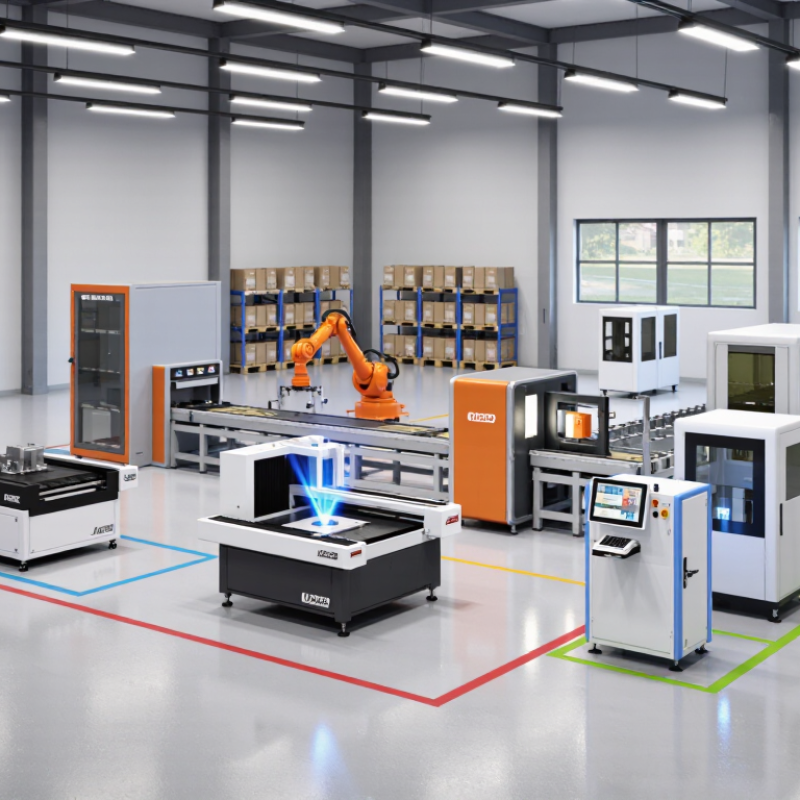
In 2026, small manufacturing equipment means more than a compact machine. It combines a limited footprint, moderate power demand, and flexible production capacity. A practical unit should fit through standard doors and operate without major factory reconstruction. Modular tooling matters too. Buyers can change products without replacing the entire line.
Digital readiness now defines size as much as physical dimensions. Equipment should record production data, support remote diagnostics, and connect with common factory software. The International Federation of Robotics reported 541,302 industrial robots installed worldwide in 2023. This indicates that automation is becoming accessible beyond large plants. However, a small robotic cell still needs clear guarding, operator training, and documented risk controls. A small machine can create a large compliance burden.
Energy use also deserves attention. The International Energy Agency estimates that electric motor systems consume about 70% of industrial electricity. Efficient drives, standby modes, and measurable consumption can reduce operating costs. For global buyers, voltage compatibility, spare-part availability, training materials, and local service access are equally important. The definition remains imperfect. A lightweight machine with expensive maintenance is not truly small in business terms. Buyers should compare total ownership cost, not only purchase price. Industry surveys often emphasize automation, but they understate installation delays and operator learning time. That gap deserves closer scrutiny.
2026 Best Small Manufacturing Equipment for Global Buyers - What Defines Small Manufacturing Equipment in 2026
| Equipment Category | Typical Manufacturing Use | Working Capacity | Typical Output or Speed | Installed Power | Approx. Footprint | Typical Equipment Price (USD) | Best Fit for Global Buyers |
|---|---|---|---|---|---|---|---|
| Compact CNC Milling Machine | Precision metal parts, prototypes, fixtures, and small-batch components | Approx. 400–800 × 250–500 × 300–500 mm X/Y/Z travel | Spindle speed typically 6,000–15,000 rpm; 3- or 4-axis machining | 3–12 kW | 1.5–4.0 m² | $20,000–$90,000 | Job shops, maintenance departments, technical schools, and low-volume exporters |
| Compact CNC Lathe | Bushings, shafts, threaded parts, fittings, and rotational components | Typical swing 250–500 mm; turning length 300–750 mm | Spindle speed typically 3,000–6,000 rpm; automatic tool changing available | 5–15 kW | 2.0–5.0 m² | $25,000–$100,000 | Small metalworking factories requiring repeatable cylindrical parts |
| Desktop or Small-Format CNC Router | Wood, plastics, composites, signs, packaging inserts, and light non-ferrous materials | Typical bed size 600 × 900 mm to 1300 × 2500 mm | Cutting speed commonly 3–18 m/min, depending on material and tool | 2–8 kW | 1.5–6.0 m² | $4,000–$35,000 | Furniture workshops, signage producers, educational facilities, and packaging suppliers |
| Compact Fiber Laser Cutting Machine | Sheet-metal brackets, enclosures, panels, decorative parts, and small components | Common work area 600 × 900 mm to 1500 × 3000 mm | Laser power typically 1–6 kW; suitable for thin to medium sheet metal | 12–35 kW including auxiliaries | 4–12 m² | $35,000–$160,000 | Metal fabricators needing high repeatability and reduced setup time |
| CNC Press Brake | Bending cabinets, brackets, frames, ducts, and sheet-metal assemblies | Typical bending length 1,000–2,500 mm; force 40–160 tonnes | Approximately 8–20 bends per minute, depending on part complexity | 5–20 kW | 3–8 m² | $25,000–$120,000 | Contract manufacturers and component suppliers producing repeat batches |
| Small Injection Molding Machine | Plastic housings, caps, fittings, consumer parts, and technical components | Typical clamping force 20–160 tonnes; shot size varies by polymer | Cycle times commonly 15–90 seconds | 5–30 kW | 2–8 m² | $15,000–$100,000 | Manufacturers with established molds and recurring plastic-part demand |
| Industrial FDM 3D Printer | Functional prototypes, jigs, fixtures, low-volume polymer parts, and tooling aids | Typical build volume 200–500 mm per axis | Layer heights commonly 0.10–0.40 mm; production speed depends on geometry | 0.5–3 kW | 0.8–2.5 m² | $3,000–$30,000 | Design offices, maintenance teams, universities, and rapid-development workshops |
| Desktop or Compact SLA/DLP 3D Printer | High-detail prototypes, dental models, casting patterns, and small precision parts | Typical build volume 130–350 mm per axis | Layer heights commonly 0.025–0.150 mm | 0.2–2 kW | 0.5–1.5 m² | $2,000–$25,000 | Businesses prioritizing surface finish, dimensional detail, and short development cycles |
| Laser Marking Machine | Serial numbers, QR codes, logos, traceability marks, and product identification | Typical marking field 70 × 70 mm to 300 × 300 mm | Marking speed commonly up to 4,000–10,000 mm/s, depending on material | 0.5–2 kW | 0.5–1.5 m² | $3,000–$25,000 | Export-oriented manufacturers requiring permanent, readable product traceability |
| Small Vacuum Forming Machine | Trays, packaging, covers, display parts, and formed plastic prototypes | Typical forming area 400 × 400 mm to 1,200 × 800 mm | Approximately 1–8 cycles per minute | 3–18 kW | 1.5–5.0 m² | $5,000–$45,000 | Packaging companies and manufacturers producing short runs or customized plastic forms |
Related Posts
-
10 Tips for Choosing the Right Manufacturing Machine?
-
What Are the Best Machine Industry Suppliers in China?
-
How to Find Reliable Machine Industry Suppliers in 2026?
-
What Is an Automatic Manufacturing Machine?
-
10 Tips for Choosing the Right Machinery Machine
-

2026 Top Machine Industry Trends for Global Buyers?